Pre-Selling vs RFO (Ready-for-Occupancy) Condos in the Philippines: Which Should You Buy in 2026?
By MSC Editorial — the in-house editorial team of Manila Skyline Condos, tracking developer pre-selling terms, buyer protections, and Metro Manila condo inventory across the Philippines.
The biggest fork in a first-time Manila condo purchase is not which tower. It's which mode of buying: commit now to a unit that doesn't exist yet, or pay more for one you can walk through today. Pre-selling and RFO are not just price tiers — they represent entirely different contracts, timelines, risk profiles, and cash-flow realities. Choosing wrong costs real money, and choosing right is how a young professional on a regular salary ends up owning a BGC unit without a lump-sum down payment.
This guide lays the two modes side by side — definitions, costs, risks, financing, legal rights, and an honest verdict on who each one fits.
Key Takeaways
Pre-selling units typically price 20–30% below the equivalent RFO unit in the same building, and the down payment is split into small, interest-free monthly amounts across the 2–4 year construction period. (Figures are market estimates; actual terms vary by project.)
RFO means you can move in — or rent out — on day one, but you pay the finished-product premium and must settle the down payment faster, usually within 30–60 days.
Maceda Law (RA 6552) protects installment buyers on both routes: grace periods and a partial cash refund once you've paid at least two years.
The honest verdict: pre-selling suits patient buyers who want the lowest monthly entry and are comfortable waiting; RFO suits buyers who need an address or rental income now and can absorb a higher cash entry.
Neither is universally better. Location and developer track record matter more than the mode — a pre-selling unit in a slow-moving fringe area beats an RFO unit nowhere.
Quick orientation: This article is a supporting guide within the P3 Pre-Selling, Payments & ROI cluster. The full picture on how pre-selling works — payment ladders, Maceda Law protections, appreciation — lives in the P3 pillar: Pre-Selling Condos in Manila 2026. For payment mechanics in detail, see how condo payment terms work. The pillar guide above also covers whether a pre-selling buy is a smart investment — appreciation, risk, and realistic return expectations. Choosing a neighborhood? Read what living in BGC actually looks like in 2026.
What Does Pre-Selling Actually Mean?
Definition — pre-selling: You are buying a unit while the tower is still under construction — sometimes before ground is broken. The price is locked on the day you reserve. You pay the developer in staggered installments across the 2–4 year build period, then take possession at turnover once the building is completed and has a Certificate of Occupancy.
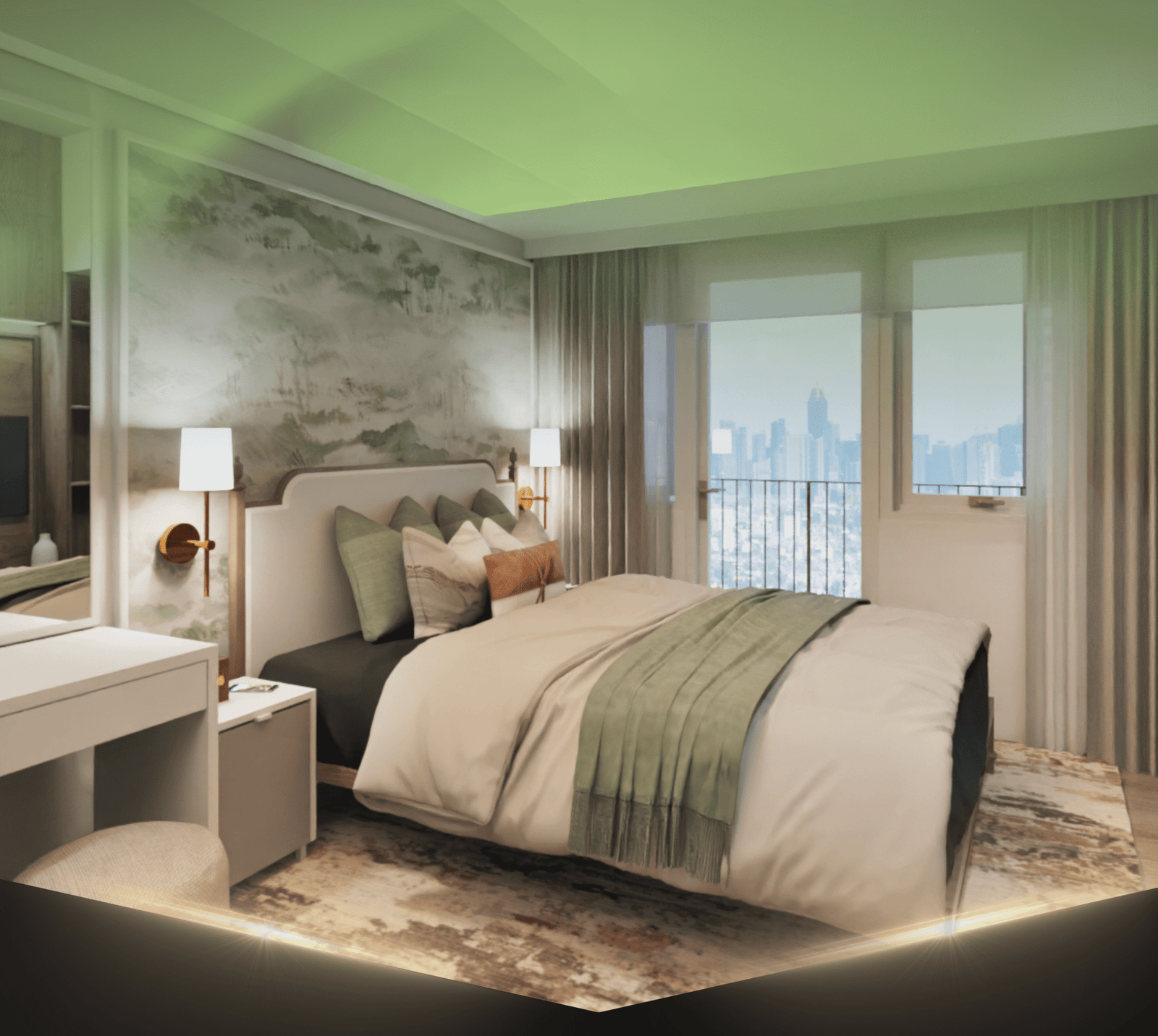
Pre-selling buyers view architectural renders like this rather than a finished unit.
The developer's incentive is capital to fund construction without drawing down a bank line. Your incentive is price: pre-selling units are commonly 20–30% below the eventual RFO price of the same unit type in the same building, because you are bearing construction-period risk and waiting time in exchange for that discount. (This range is a market estimate; specific tower discounts vary.)
The down payment — typically 10–35% of the contract price — is split into interest-free monthly installments across the construction period rather than paid as a lump sum up front. On smaller units, this produces the headline "₱14,000–₱25,000 per month, zero down" terms that make pre-selling accessible on a first-time buyer's budget. The remaining balance (usually 65–90% of the price) is settled at turnover through a bank loan, a Pag-IBIG housing loan, or the developer's in-house financing.
What Does RFO (Ready-for-Occupancy) Mean?
Definition — RFO (ready-for-occupancy): The unit is in a completed building that has received its Certificate of Occupancy. You can inspect the actual room — not a show unit, not a floor plan — before signing. Once financing is arranged, you move in or rent it out immediately. There is no construction risk and no waiting period.
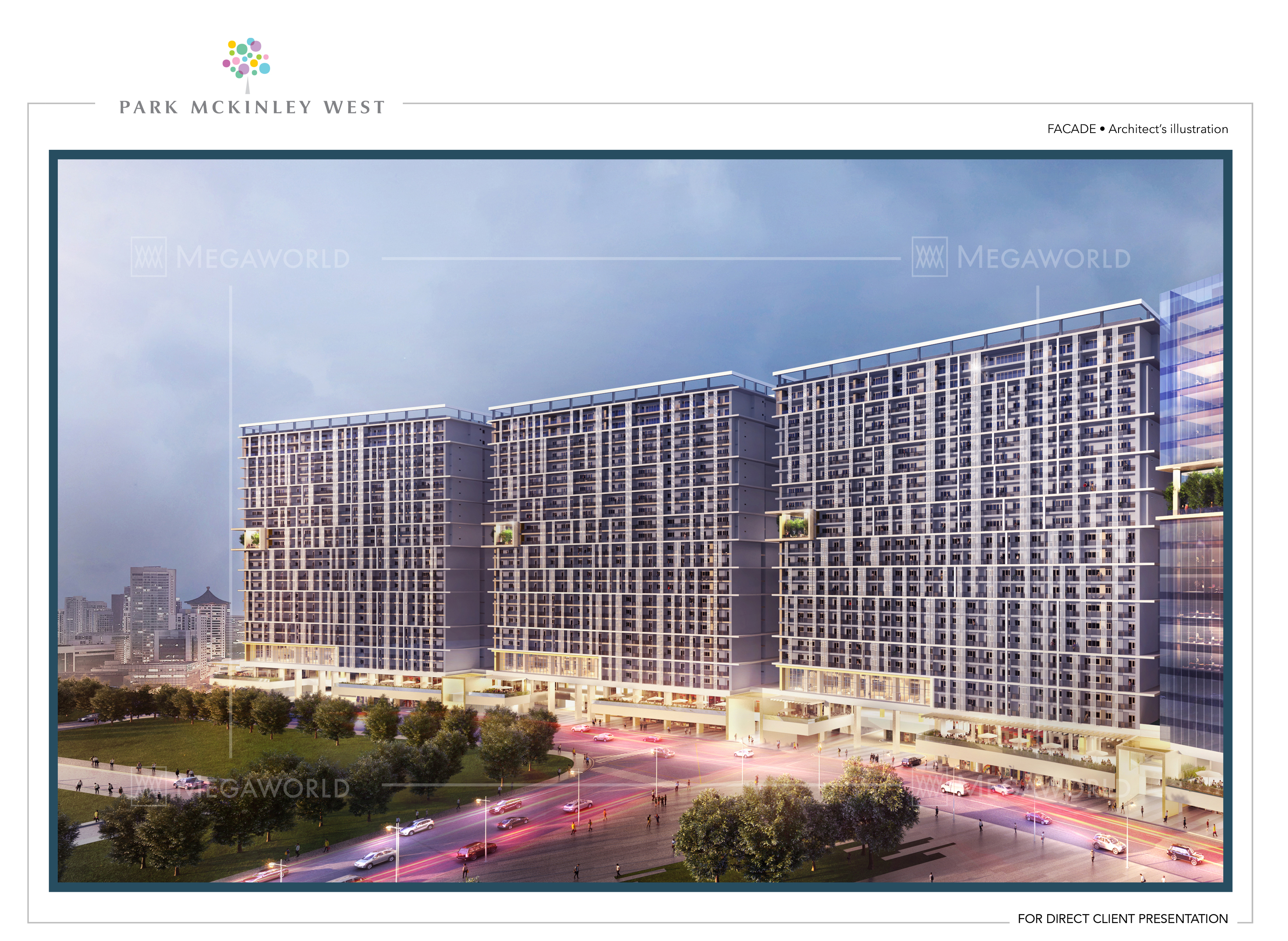
RFO towers like this one are already complete, so you can inspect the actual unit before buying.
RFO units are sold at the finished-product price. The premium over pre-selling reflects the eliminated construction risk and the developer's cost of carrying the completed inventory. Down payment expectations are higher and the timeline is faster: most RFO transactions require the buyer to settle the down payment (typically 10–20% of the price) within 30–60 days of reservation, then move to bank or Pag-IBIG financing for the balance.
RFO also appears in the secondary market — resale units from individual owners or investors who bought pre-selling years ago and are now selling the finished unit. These can offer strong value, especially in well-established towers, and they are also covered by Maceda Law protections if sold on installment terms.
The Head-to-Head Comparison
The decision table below maps the eight variables that matter most. None of these variables should be read in isolation — a buyer weighing pre-selling against RFO is really weighing patience against certainty, and every row below is a different expression of that same trade-off. Read the row that speaks to your situation, then read the two after it, because entry price rarely tells the whole story on its own.
Higher — reflects completed, licensed-for-occupancy building
Down payment structure
Spread interest-free over 2–4 years of construction
Larger and due within 30–60 days of reservation
Monthly outlay during pre-selling period
Low (₱14,000–₱25,000/mo on smaller units — indicative)
Not applicable; you're already in or renting out
Wait time
2–4 years before you can move in or rent out
None — move in (or rent out) as soon as financing closes
What you inspect before buying
Floor plan, show unit, and the developer's track record
The actual unit — walls, finishes, views, layout
Construction/project risk
Real: delays, developer default, finishes not as specified
None — the building is standing
Appreciation potential
Higher — you lock in today's price and ride the build-out
Lower — you pay the already-priced finished value
Best fit
Patient value buyer, first-timer building equity, investor with a 4–6 year horizon
Buyer who needs an address or rental income now; buyer who wants to inspect before committing
How Financing Differs Between the Two Routes
Pre-selling: The developer acts as your primary financier during construction. You are not borrowing from a bank in the first stage — you are paying the developer directly, usually with zero interest on the equity/down-payment portion. At turnover, you shift to a formal loan:
Bank mortgage — typically lower interest rate than in-house; requires income documents and credit approval; 10–25 year amortization terms.
Pag-IBIG housing loan — available to members with at least 24 monthly contributions; competitive rates; covers principal residences and qualifying investment properties. Check current Pag-IBIG housing loan rates at the HDMF official site (pagibigfund.gov.ph) — rates change.
Developer in-house financing — available without stringent bank credit requirements, but carries a higher interest rate. A practical last-resort option, not the optimal route. Plan for bank or Pag-IBIG early so you do not default to the costliest option at turnover.
The practical gap between these three financing routes is larger than most first-time buyers expect. A bank mortgage in the mid-2026 rate environment typically prices several percentage points below developer in-house financing on the same unit — over a 20-year term, that spread can add up to more in total interest than the original pre-selling discount was worth. This is the quiet reason experienced buyers treat "get pre-approved for a bank loan" as a task to start in year one of a pre-selling contract, not month 30 of a 36-month build. Waiting until turnover to start the financing conversation is the single most common mistake pre-selling buyers make.
RFO: You need to arrange financing faster. The lump-sum down payment is due within 30–60 days of reservation, and the balance follows shortly after through a bank, Pag-IBIG, or in-house loan. There is no construction-period runway to line up financing. If you cannot qualify for a bank loan by the time the reservation window closes, you are left with the developer's in-house rate or walking away. Pre-screening your bank or Pag-IBIG eligibility before reserving any RFO unit is non-negotiable.
What Legal Protections Apply to Each Route?
Both routes are covered by Philippine buyer-protection law once payments are structured on installment. Two statutes do the work.
Presidential Decree No. 957 (PD 957) — the Subdivision and Condominium Buyers' Protective Decree. Under this law:
A developer cannot legally pre-sell without a DHSUD License to Sell backed by a performance bond guaranteeing project completion.
If the developer fails to develop the project per the approved plans and timeline, a buyer who gives due notice and stops paying can be reimbursed the total amount paid (including amortization interest), with legal interest added.
A sale made without a License to Sell can be voided and fully refunded at the buyer's instance.
You have the right to inspect all project documents before signing: the License to Sell, land title, approved plans, performance bond, and master deed.
PD 957 is most directly relevant to pre-selling because the construction-period risk is where it applies. For RFO units purchased directly from a developer, PD 957 still governs the transaction — but construction risk has already been removed.
Maceda Law (RA 6552) — the Realty Installment Buyer Protection Act. This governs what happens if you fall behind on installment payments on either route:
If you've paid at least two years of installments: you receive a grace period of one month for every year paid (exercisable once every five years); and if the contract is cancelled, you are entitled to a cash surrender value refund of 50% of total payments made, rising by 5% per year after five years of payments, capped at 90%.
If you've paid less than two years: you receive a minimum 60-day grace period from the missed due date, but no mandated cash refund.
Cancellation is not instant: the developer must serve a notarial notice, and the contract is only cancelled 30 days after you receive it, with the refund (if applicable) payable within 60 days.
The two-year payment threshold is the single most important number in Maceda Law. It is the line at which you acquire a refund right — which means it shapes how much you commit early and how you budget for any gap in payments.
Who Should Buy Pre-Selling?
Pre-selling is built for the buyer who has more time than cash. Specifically:
First-time buyers on a salaried income who cannot produce a 20% lump-sum down payment but can sustain a ₱14,000–₱25,000 monthly commitment for three years while keeping their current housing arrangement.
Young professionals with a 4–6 year investment horizon who want to build equity without an immediate rental-income requirement.
Small investors targeting a BGC or Makati location where structural demand (offices, universities, expat community) supports both appreciation during construction and rental yields at turnover.
OFW buyers using a staggered remittance plan — monthly equity payments map cleanly to a remittance schedule, and the wait time is a feature rather than a bug.
Pre-selling does not suit the buyer who needs a roof in the next six months, the buyer who cannot absorb a construction delay of 12–18 months without income disruption, or the buyer who is stretched so thin on the construction-period payments that turnover financing becomes uncertain.
Who Should Buy RFO?
RFO is built for the buyer who has more cash than time. Specifically:
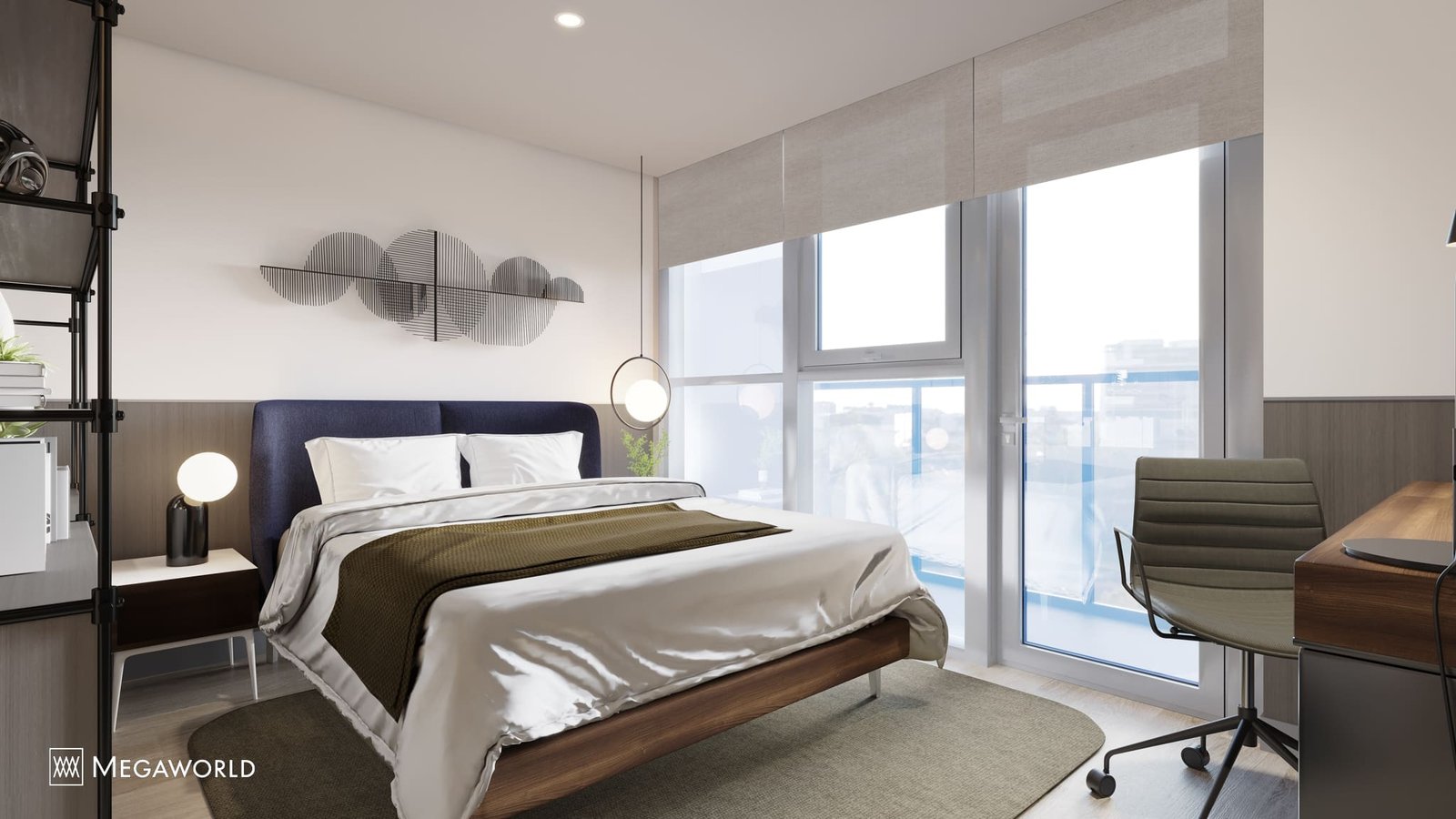
RFO buyers can walk through finished interiors like this before signing.
Buyers relocating to Manila who need an address before a job start date — RFO is the only choice.
Investors who want immediate rental income and cannot carry a property cost for two to four years before the first tenant.
Buyers who need to physically inspect quality before committing — valid concern in a market where pre-selling show units and final finishes do not always match.
End-users in the mid-to-senior career stage who have already saved a 20% down payment and can qualify for bank financing quickly.
Secondary-market buyers looking at resale units at below-current-developer prices in established towers — the "sweet spot" RFO play.
The caveat: RFO in 2026 is a buyer's market with elevated Metro Manila condo vacancy (approximately 25% as of late 2025). That means negotiating room exists — particularly on developer-held unsold RFO inventory, where extended payment terms or price reductions are available for motivated buyers. The premium is real but it is not fixed. Ask directly whether a specific RFO unit has been sitting unsold for an extended period; developers are frequently more flexible on price or terms for aged inventory than their published price list suggests, and that flexibility rarely shows up anywhere online.
The Honest Verdict: Which Should You Choose?
Neither mode is objectively better. The honest frame is a question: do you need it now, or can you wait?
Do you need it now, or can you wait? That one question decides more of this purchase than any spreadsheet.
If you can wait, and your priority is the lowest monthly outlay to get into a quality tower in a transit-connected district like BGC or Makati, pre-selling wins. The entry price is lower, the monthly commitment during construction is manageable, and — in a location with structural demand — you have a genuine chance of gaining equity before you ever turn a key. The risks (delays, construction quality, turnover financing) are real but manageable with the right developer and budget discipline.
If you need the unit immediately — or need immediate rental income — RFO wins, full stop. No amount of price discount compensates for two years of waiting when you need a roof or a return on invested capital right now.
A concrete illustration makes the trade-off easier to feel. Take a hypothetical 30-square-meter 1BR unit that might price around ₱9.5 million at RFO in a well-located BGC-adjacent tower. The same unit type bought pre-selling two to three years earlier could enter closer to ₱7.2 million — a gap of roughly ₱2.3 million, spread as zero-interest monthly installments in the ₱18,000–₱22,000 range across the build period. (These are illustrative, indicative figures for a mid-market unit — actual pricing varies by tower, floor, view, and developer; always confirm current numbers before deciding.) That is the arithmetic a pre-selling buyer is trading against a multi-year wait: whether the ₱2.3 million gap is worth it depends on what you are paying to live somewhere else in the meantime, and whether your income can sustain the monthly installment without strain. Run this calculation with your own numbers, not the illustrative ones above, before committing to either route.
The third scenario is the one most buyers don't consider: a pre-selling unit in the wrong location is worse than either option. Elevated 2026 vacancy is a genuine problem in fringe areas without transit or employment anchors. If you are going pre-selling, buy where demand is structural: near an MRT or BGC shuttle corridor, walking distance to office towers, or within the catchment of a major hospital or university. The location decision outranks the mode decision. Browse current available Metro Manila listings to compare active pre-selling and RFO inventory.
For a specific tower's current payment schedule, the exact monthly ladder during construction, and whether a zero-down promo is currently available, request the official price list and payment terms via our contact page — numbers change as units sell, so current figures come directly from the developer's accredited team, not from a website.
About the Author
MSC Editorial is the in-house editorial team behind this guide — the house editorial brand for Manila Skyline Condos. The team researches Philippine condo buying, financing, and neighborhoods using primary legal and developer sources, tracking developer pre-selling structures (reservation, down-payment, and turnover mechanics), Philippine buyer-protection law (PD 957, RA 6552), and live Metro Manila condo inventory. Every legal and financial claim in this guide is sourced to primary statute text, a government body, or a named market report, listed under Sources below.
A Quick, Honest Disclaimer
This guide is general information, not legal, tax, or financial advice, and nothing here is a guarantee of investment returns. Pre-selling involves real construction and market risk; RFO pricing and vacancy conditions change. Property values can fall as well as rise. Before signing or paying anything, confirm the specifics — including any expected return — with a licensed Philippine real estate broker, lawyer, and/or financial professional.
Frequently Asked Questions
What is the main difference between pre-selling and RFO?
Pre-selling means you buy a condo unit while it is still under construction, paying the developer in staggered interest-free installments over the 2–4 year build, then taking possession at turnover. RFO (ready-for-occupancy) means the building is complete and you can move in or rent it out immediately after closing. Pre-selling is generally 20–30% cheaper per unit; RFO eliminates construction risk and waiting time.
Is pre-selling cheaper than RFO?
Generally yes — pre-selling units are typically priced 20–30% below the equivalent finished-unit (RFO) price, and the down payment is broken into small monthly installments at zero interest across the construction period. The trade-off is a 2–4 year wait before you can occupy or earn rental income. (Price differences are market estimates and vary by project and developer.)
Can I inspect the unit before buying pre-selling?
Not the actual unit — it doesn't exist yet. You inspect a floor plan, developer show units or model rooms, the master deed, and the developer's project documents (including their DHSUD License to Sell). This is why developer track record and DHSUD license verification matter more in pre-selling than in RFO.
What is the minimum down payment for an RFO condo in the Philippines?
Typically 10–20% of the contract price, due within 30–60 days of reservation. The exact percentage and timeline depend on the developer and the specific project. Unlike pre-selling, the down payment is not spread over years — you need it accessible quickly, which is why pre-financing eligibility checks matter before reserving an RFO unit.
How does the Maceda Law protect me when buying on installment?
Maceda Law (RA 6552) applies to both pre-selling and RFO units purchased on installment. If you have paid at least two years of installments and the contract is cancelled, you are entitled to a cash surrender value equal to 50% of total payments made (rising by 5% per year after five years, capped at 90%). With less than two years of payments, you get a minimum 60-day grace period but no mandated refund. Cancellation also requires a formal notarial notice, effective 30 days after you receive it.
What is the difference between Pag-IBIG and bank financing for a condo?
Both cover the balance payment at turnover (pre-selling) or at purchase (RFO). Pag-IBIG (HDMF) housing loans require at least 24 monthly fund contributions and are typically available for principal residences; they offer competitive rates but have loan ceilings and property eligibility rules. Bank mortgages (BDO, BPI, Security Bank, etc.) have fewer coverage restrictions but require stricter income and credit documentation. Developer in-house financing requires the least documentation but carries the highest interest rate. Plan for bank or Pag-IBIG approval well before turnover to avoid defaulting to in-house terms.
Can I resell a pre-selling unit before turnover?
Often yes — this is called a "flip" or assignment of rights. You assign your contract and the payments you have made to a new buyer, ideally at a profit if the unit has appreciated during construction. Developer approval is typically required, and a deed of transfer or assignment of rights must be done by notarial act. Check your Contract to Sell for specific assignment provisions before assuming you can flip.
What is the risk of buying RFO in Metro Manila in 2026?
The primary risk is overpaying in a soft market. Metro Manila condo vacancy was approximately 25% heading into 2026, with a large unsold inventory of developer-held RFO units. Rental yields in fringe or oversupplied areas may not cover holding costs. That said, 2026 is a buyer's market — RFO buyers with cash or quick financing approval have room to negotiate on developer-held inventory. Core CBDs like BGC and Makati are recovering faster than fringe locations.
Does the RFO premium make it a worse investment than pre-selling?
Not necessarily. The pre-selling discount is real, but so is the 2–4 year opportunity cost of capital tied up in a property you can't occupy or rent. An RFO unit generating rental income immediately can outperform a pre-selling unit on a total-return basis if the construction period is long or the rental market is strong. Compare the two on a net-yield basis for your specific timeline and location, not just on purchase price.
How do I find out the current price list for a specific pre-selling or RFO tower?
Developers do not publish official price lists online — pricing is per project, changes as units sell, and is released through accredited sales teams. The fastest route is to request the price list and payment schedule via our contact page. We connect you with a specialist for the specific tower who has the current per-unit pricing, available unit inventory, and any active zero-down or flexible-payment promos.
Sources
Legal and market facts in this guide were verified against the following authoritative sources:
Maceda Law grace periods (1 month per year paid; 60-day minimum under 2 years): DHSUD official FAQs — https://dhsud.gov.ph/maceda-law-ra-6552-legal-faqs/
Maceda Law cash surrender value (50% after 2 years, +5%/year after 5 years, cap 90%): DHSUD refund FAQs — https://dhsud.gov.ph/the-maceda-law-and-refund-of-installment-payments-hred-faqs/
Maceda Law full statute text (RA 6552): Supreme Court E-Library — https://elibrary.judiciary.gov.ph/thebookshelf/showdocs/2/1688
PD 957 License to Sell requirement and performance bond: DHSUD official FAQs — https://dhsud.gov.ph/p-d-no-957-legal-faqs/
PD 957 License to Sell verification process: DHSUD License to Sell FAQs — https://dhsud.gov.ph/requirement-of-license-to-sell-hred-faqs/
PD 957 full statute text (Subdivision and Condominium Buyers' Protective Decree): LawPhil — https://lawphil.net/statutes/presdecs/pd1976/pd_957_1976.html
PD 957 refund remedy for an unlicensed developer: Respicio & Co. — https://www.lawyer-philippines.com/articles/pre-selling-house-refund-for-unlicensed-developer
Pre-selling vs RFO price gap and market context: Philbrokers — https://philbrokers.com/pre-selling-vs-rfo-philippines/
Pre-selling vs RFO investment comparison: Eurotowers International — https://eurotowersintl.com/pre-selling-vs-rfo-condos-which-is-the-better-investment-in-the-philippines/
Pre-selling vs RFO for OFW buyers: Ayala Land Property Finder — https://ayalalandpropertyfinder.com/pre-selling-vs-rfo-condos-ofw-guide/
Pre-selling vs RFO buyer considerations: Federal Land knowledge hub — https://federalland.ph/knowledge-hub/pre-selling-vs-rfo-condo/
Pag-IBIG (HDMF) housing loan program and eligibility requirements: HDMF official housing loan page — https://www.pagibigfund.gov.ph/HousingLoanProgram_RHLP.html
Note on verification: Legal mechanics (Maceda Law grace periods and cash surrender value; PD 957 License to Sell, performance bond, and non-development refund) were confirmed against DHSUD official FAQs, primary statute texts (Supreme Court E-Library, LawPhil), and independent legal commentary. The 20–30% pre-selling price discount and 2026 vacancy figure (~25%) are market estimates drawn from property industry sources and are flagged in-text as indicative. All financial figures are estimates only; no return on investment is guaranteed. Readers should verify current terms with a licensed Philippine real estate broker or financial professional before any purchase decision.