
Manila Bay Reclamation District: Why Investors Are Watching in 2026
Manila Bay Reclamation District 2026: Why Investors Are Watching Despite the Risks
By MSC Editorial — the in-house editorial team of Manila Skyline Condos, tracking Manila Bay reclamation policy, Entertainment City rental demand, and live condo inventory using primary developer, government, and brokerage sources.
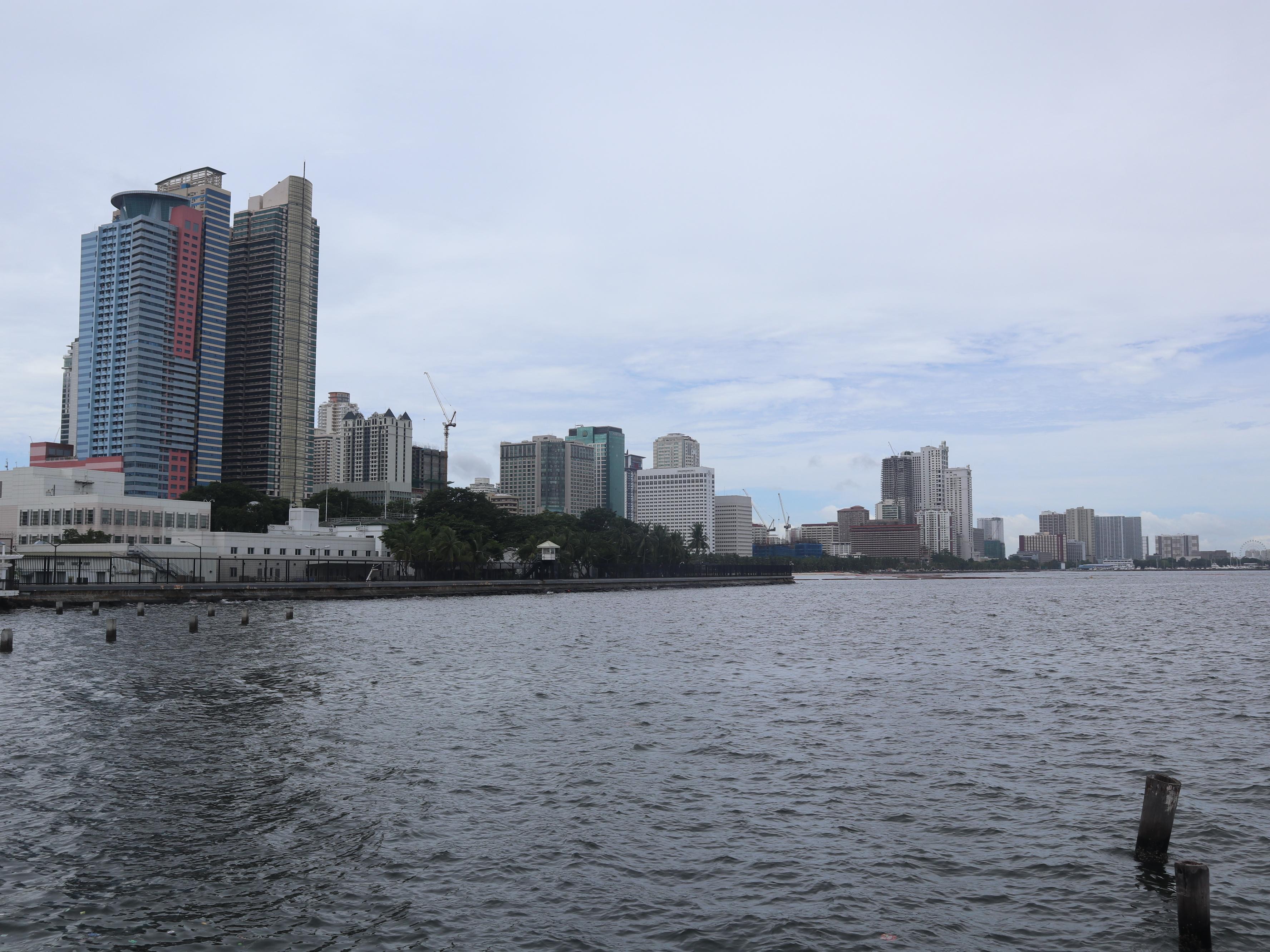
The Manila Bay reclamation district attracts investor attention for a reason that is easy to state and hard to act on cleanly: it is the only large, master-planned waterfront corridor in Metro Manila where entry prices are still below the established CBDs, where a genuine tourism-and-gaming economy is already running, and where a long list of catalysts — rail, resort expansion, NAIA proximity — sit between the current price and a possible future one. For an investor with the right time horizon, that gap is the thesis.
The honest version of that thesis, however, carries two risks that are structural, not cyclical. The Bay Area is the most oversupplied condo submarket in Metro Manila by a significant margin. And the reclamation projects that would complete the district's western expansion have been suspended under a national environmental review that, as of mid-2026, remains unresolved. A buyer who holds only the upside has a thesis. A buyer who holds both is making an investment. This piece is written for that second buyer — the investor considering the Bay City and Entertainment City corridor who wants the full picture before committing.
The line that separates a thesis from an investment: a buyer who holds only the upside has a thesis; a buyer who holds both the upside and the risk stack is making an investment.
Key Takeaways
- The district's investment case rests on four concrete drivers: Entertainment City's integrated resorts, NAIA airport proximity, the delivered LRT-1 Cavite Extension rail link, and a below-CBD entry price that gives appreciation a real distance to travel.
- Rental demand exists but is not fully reliable: gaming and BPO workers, short-stay visitors, and returning expats drive leasing — but the Bay Area vacancy rate is approximately 57% (Q4 2025, Colliers) and is projected to approach 60% by end-2026 before easing.
- The POGO era is over: the tenant base that inflated Bay Area prices and rents from 2016 to 2022 is gone. The recovery is real but gradual — Colliers projects vacancy will begin easing in 2027, not 2026.
- Reclamation is suspended: the Marcos administration suspended 22 Manila Bay reclamation projects in 2023 for environmental review; as of mid-2026, most remain suspended. Two projects have been flagged for possible resumption; the wider suspension stands and environmental and fishing-community opposition remains vocal.
- Named towers exist in this corridor — SMDC's Sail Residences at the MOA Complex (Pasay) and Megaworld's Bayshore Residential Resort within Westside City (Parañaque) — but inventory, pricing, and turnover status shift; route to
/contactfor current figures. - This is a patient, thesis-driven investment, not a near-term yield play. The entry-price discount is real. So is the risk stack.
Context: This article is a supporting deep-dive within the Manila Bay Area 2026 neighborhood and investment guide — read the pillar first if you want the full district overview. Pre-selling ROI mechanics are covered later in this guide. Foreign buyers: the ownership rules are explained in can foreigners buy a condo in the Philippines.
What Makes This District Different from Any Other Metro Manila Market?
Most Metro Manila condo investments sit in one of two categories: established CBDs with thin yields but reliable demand, or emerging suburban townships with a long growth timeline and uncertain infrastructure. The Manila Bay reclamation district — Bay City, straddling Pasay and Parañaque — occupies a genuinely different position. It has a functioning entertainment economy today. It has airport proximity BGC and Makati cannot match. And it has a price that still reflects its risks.
The comparison investors reach for is Bonifacio Global City — a master-planned, reclaimed-or-cleared district that appreciated dramatically from its early-2000s entry prices to today's ₱170,000–₱250,000+ per sqm. The Bay Area's current indicative range of ₱120,000–₱215,000 per sqm (2026 market estimates; confirm current figures) creates a genuine entry-price gap relative to BGC, and "convergence" is the word most bullish analysts use. The question is whether the economic foundations of the two districts are comparable — and on that question, the answer is more complicated than the comparison suggests.
BGC was built on corporate offices and international schools. Those are deep, Monday-to-Friday, year-round demand drivers. The Bay Area was built on casinos, resorts, and retail. Those are real, but cyclical and concentrated — and they were stress-tested brutally when the POGO sector contracted and 57% of rental units went empty.
What Makes Entertainment City a Functioning Economic Engine?
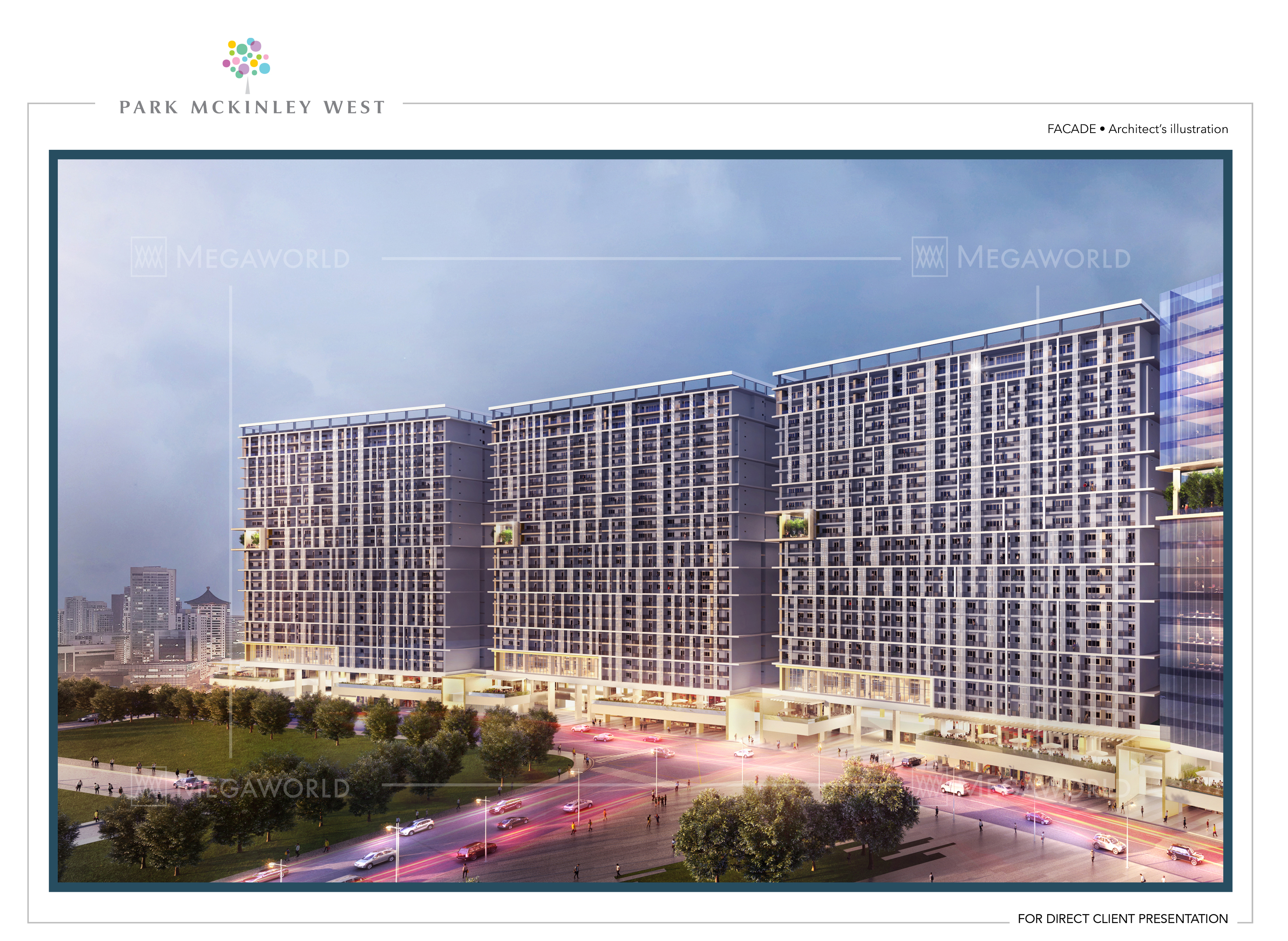
Entertainment City — PAGCOR's roughly 8-square-kilometer integrated resort zone in Parañaque — is the most important single fact about Bay Area rental demand. Okada Manila, Solaire Resort and Casino, City of Dreams Manila, and the incoming Westside City resort (targeting a 2026 opening, with the $450-million Travellers-Suntrust investment completing its resort component) collectively draw millions of visitors annually and employ a substantial workforce of gaming staff, hospitality workers, and in-house BPO personnel. Megaworld's 31-hectare Westside City township — where Bayshore Residential Resort is located — is built within this zone specifically to capture the live-work-stay demand those resorts generate.
This matters for investors because it represents a rental demand base that did not exist when the Bay Area was purely a POGO-driven market. Gaming and hospitality workers are longer-tenure renters than the seasonal POGO influx; they live where they work, and Entertainment City is their workplace. PAGCOR reported close to 5,000 workers in the Special Class BPO sector within its licensed areas as of early 2025, and the broader resort employment base is substantially larger.
Why Is NAIA Airport Proximity a Concrete Advantage?
NAIA's terminals are minutes from the Bay City residential belt. No other established Metro Manila condo district offers this. For the investor targeting short-term furnished rental demand — from inbound business travelers, expats on project rotation, and domestic travelers connecting through Manila — airport proximity is a durable differentiator. It also shapes the end-user tenant profile: OFWs on home leave, frequent travelers, and families with an internationally-mobile member are all drawn to an address where a 4 a.m. departure means a 20-minute cab ride rather than an hour through EDSA.
How Does the LRT-1 Cavite Extension Change Connectivity?
The single most important infrastructure milestone for Bay City connectivity in this decade was delivered. The LRT-1 Cavite Extension's Phase 1, inaugurated by President Marcos in late 2024, added new stations including a Redemptorist-Aseana station directly serving the Aseana City side of the Bay Area. Further phases push the line south toward Cavite, with full Cavite City operation officially targeted around 2031 (subject to delay, per standard Philippine infrastructure timelines). This is delivered rail access — not a blueprint — that directly addresses one of the district's historic weaknesses: the Roxas Boulevard traffic trap.
For an investor, rail connectivity raises the ceiling on the tenant pool. The Aseana station brings white-collar workers who commute from farther south into the district's rental orbit, and it makes Bay Area condos viable for a wider range of daily commuters than before.
Does the Entry-Price Gap Give Appreciation Room to Run?
The arithmetic of "convergence investing" requires a price gap to converge. In the Manila Bay Area, that gap currently exists: indicative prices at ₱120,000–₱215,000 per sqm sit below BGC and Makati levels, and below the long-run value that a master-planned, transit-connected waterfront with a functioning resort economy should command if its governance and oversupply issues resolve. Pre-selling in this corridor — committing to a unit before completion at today's indicative prices — is how investors try to lock in that gap. The pre-selling condos in Manila guide explains the mechanics and the risks of that structure in detail.
Where Does the District Stand in Mid-2026?
Reclamation Is Suspended — the Full Picture
This is the structural risk most Bay Area investment pitches understate, and it deserves a straightforward account.
In 2023, President Marcos suspended all Manila Bay reclamation projects and directed the DENR to conduct a cumulative environmental impact review. DENR Secretary Maria Antonia Yulo-Loyzaga confirmed that all 22 projects were under review and temporarily suspended. The DENR has since conducted a cumulative impact assessment that identified "significant environmental and socioeconomic repercussions" associated with Manila Bay reclamation — including blockage of natural floodwater drainage, threats to fisherfolk livelihoods, and biodiversity loss.
As of mid-2026, the overall suspension remains in force. The Philippine Reclamation Authority (PRA) indicated in early June 2026 that two projects — the Bacoor Inner Island project (reduced from 90 to 67.4 hectares) and the Manila Waterfront City project (318 hectares) — were being assessed for possible resumption, citing compliance with DENR requirements. But as of this writing, DENR and Malacañang had not issued official statements confirming clearance for either. Fisherfolk group Pamalakaya has called for the cancellation of all projects, warning that resumption would worsen Metro Manila flooding and displace coastal communities — and as recently as June 5–9, 2026, they reiterated this warning publicly.
What this means for an investor: the future expansion of the reclamation district — new land, new towers, new infrastructure built on freshly reclaimed ground — is genuinely uncertain. The existing built environment (MOA Complex, Entertainment City, Aseana City) is not at risk; those projects were completed before the suspension. But the "next 500 hectares" thesis that some developer presentations imply depends on policy decisions that have not been made.
The rule: evaluate this district on what exists today, not on projected reclamation. Buy the existing district, not the promised expansion.
Vacancy Is High and Projected to Stay High Through 2026
The Bay Area recorded approximately 57.3% condo vacancy in Q4 2025 — the highest of any Metro Manila submarket, per Colliers. Colliers projected in February 2026 that this figure could approach 60% by end-2026 before easing in 2027 as new completions slow. The cause is documented: from 2016 to 2022, POGO companies and their workers packed Bay Area towers; when the government moved against the sector and the workers left, occupancy collapsed. The POGO era in the Bay Area is functionally over.
The recovery is gradual. Net demand for Metro Manila condo units jumped 77% year-on-year in recent quarters as POGO-related vacations faded, and the BPO sector — now a $40 billion-plus industry employing close to 1.9 million people — continues expanding. But the Bay Area vacancy overhang is large enough that even strong net absorption will take time to clear.
For a rental investor, this means two things: near-term yields are under pressure, and today's entry price partly reflects a market that has not yet recovered — not solely an "early" entry into an appreciating district.
Which Towers Are Worth Knowing in the Bay City Corridor?
A factual tour of what exists in this corridor, named by developer and location only:
| Tower / district | Developer | Status | Indicative price (2026) |
|---|---|---|---|
| Sail Residences, MOA Complex (Pasay) | SMDC | Pre-selling (verify near-completion status) | ₱8.6M – ₱24.6M |
| Coast Residences, Roxas Blvd (Pasay) | SMDC | RFO | Contact us for current pricing |
| Bayshore Residential Resort, Westside City (Parañaque) | Megaworld | Pre-selling (unit mix/turnover verify) | Contact us for current pricing |
| Bay Area district average | — | Mixed | ₱120,000 – ₱215,000/sqm |
| BGC (for comparison) | — | Established | ₱170,000 – ₱250,000+/sqm |
Sources: SMDC (smdc.com), Megaworld/Westside City (westsidecity.com.ph), and the district-level per-sqm estimates cited earlier in this guide. All figures are 2026 indicative market estimates that vary by unit, floor, and timing — confirm before committing.
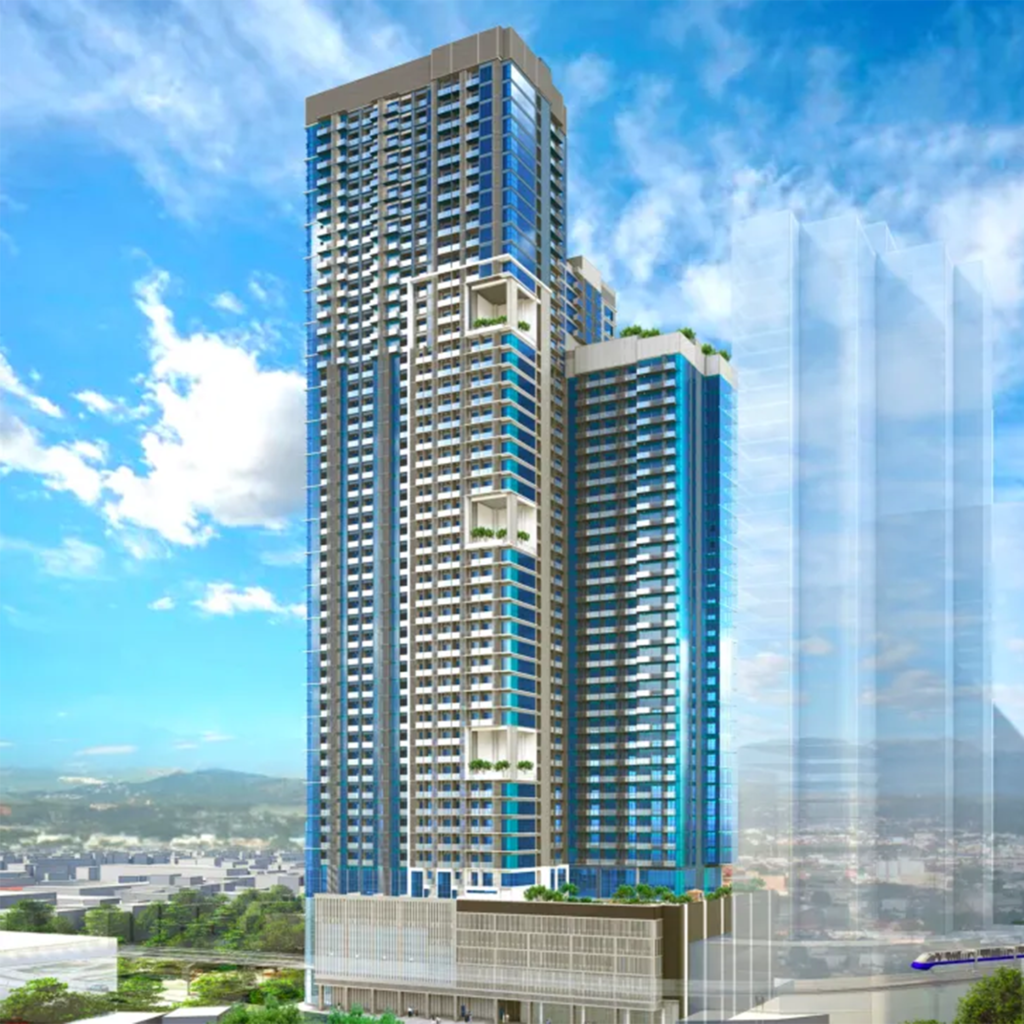
Sail Residences by SMDC at the MOA Complex, Pasay City, is SMDC's flagship Bay pre-selling offer — 1-bedroom, 2-bedroom, and 3-bedroom units with balconies across four high-rise towers, with Manila Bay views and the Mall of Asia complex at the doorstep. Indicative prices run ₱8.6M–₱24.6M (verify current status: near-completion timelines shift; confirm RFO vs pre-selling before committing).
Coast Residences by SMDC on Roxas Boulevard, Pasay, is the RFO option for buyers who want bay views and move-in readiness now rather than a pre-selling timeline. It is an established, completed tower — name it as RFO, not pre-selling.
Bayshore Residential Resort by Megaworld within Westside City, Entertainment City, Parañaque, is the headline resort-style pre-selling project inside the PAGCOR zone, positioned beside Okada and the upcoming Westside City resort. Unit mix and turnover dates are subject to verification (VERIFY: unit mix + turnover per MANILA-BUILDINGS-TO-NAME.md flag).
None of these towers is listed or linked on this site. We do not have live Bay City inventory. For current price lists, turnover schedules, and payment terms — including what each developer is offering right now — contact us and we'll match your budget to Bay Area and nearby options.
Who Does This Investment Actually Suit — and Who Does It Not?
The Bay Area in 2026 rewards a specific investor profile, and it punishes a different one.
It suits the investor who can hold for five-plus years, treats any appreciation as a potential bonus rather than a plan, and is not counting on year-one rental income to service a loan. In a market with 57% vacancy, "buy and rent out immediately at strong yield" is not a conservative base case. What is a base case is that the entry price today reflects genuine uncertainty, and that uncertainty has a reasonable probability of resolving over a medium-term horizon as supply clears, resort demand deepens, and the reclamation question gets settled one way or another.
It suits the end-user investor — someone who will live in the unit, use it as an airport-adjacent pied-à-terre, or offer it furnished to short-stay visitors — because end-user demand is not exposed to the rental vacancy problem the same way a purely investment unit is. The waterfront, the mall, and the airport are daily-use assets, not future promises.
It does not suit the investor who needs near-term rental yield to make the numbers work. The vacancy overhang is real, rents are under pressure, and Colliers' own projection for the Bay Area points to continued softness through the end of 2026 at minimum. A buyer counting on 6–7% gross yield in year one should look at a different submarket.
It does not suit the buyer who conflates "Bay City" with "Manila Bay reclamation projects" — what exists today is established; what comes next depends on policy decisions currently under environmental review with active opposition. Buy the existing district, not the projected expansion.
For comparison with a higher-vacancy district and a lower-vacancy one, see the full picture — including a direct Bay-vs-BGC read — in our Manila Bay Area neighborhood guide, alongside our Manila Bay cost-of-living breakdown for the rental-yield angle.
A Real Price, for a Real Risk, in a Real District
The Manila Bay reclamation district is not a conceptual investment — it is a 60-plus-story skyline visible from NAIA, built on decades of reclaimed land, anchored by one of Southeast Asia's most concentrated resort clusters. The investment thesis is not a stretch of imagination; it is an arithmetic bet on whether a real gap between entry price and long-run value closes over time. The risk is equally concrete: a vacancy rate that Colliers projects could approach 60%, a reclamation expansion frozen by a national environmental review, and a tenant base still rebuilding after the POGO exodus.
The investors watching this district most carefully are not the ones who believe all of that resolves quickly. They are the ones who think the price already reflects most of the risk — and that a patient entry into a functionally anchored, transit-connected, airport-proximate district is a defensible thesis even in a scenario where the reclamation stays paused and the vacancy clears slowly. Whether you are in that group depends on your time horizon and your tolerance for a market that earns its discount.
Frequently Asked Questions
Why are investors interested in the Manila Bay reclamation district?
The district offers a below-CBD entry price, a functioning entertainment and gaming economy through Entertainment City, NAIA airport proximity that no other established Metro Manila district matches, and a delivered LRT-1 rail link. For a long-horizon investor, those are real catalysts that separate the Bay Area from a generic emerging-market bet.
What is the current status of Manila Bay reclamation projects in 2026?
The Marcos administration suspended all 22 Manila Bay reclamation projects in 2023 pending a DENR cumulative environmental impact review. As of mid-2026, the suspension remains broadly in force. The Philippine Reclamation Authority has flagged two projects — the Bacoor Inner Island project and the Manila Waterfront City project — as possible candidates for resumption, but as of this writing DENR and Malacañang had not issued official clearances. Fisherfolk groups continue to call for cancellation. This is an unsettled policy situation, and future expansion of the reclaimed land base should be treated as uncertain, not guaranteed.
What is the Manila Bay Area vacancy rate in 2026?
Approximately 57.3% as of Q4 2025, the highest of any Metro Manila submarket, per Colliers Philippines. Colliers projected that vacancy could approach 60% by end-2026 before beginning to ease in 2027 as the pace of new completions slows and POGO-era absorption losses fade. Rental yields in the Bay Area are currently under pressure as a result.
What drove the Bay Area's high vacancy rate?
The POGO (Philippine Offshore Gaming Operator) sector. From roughly 2016 to 2022, POGO companies and their predominantly mainland-Chinese workforces rented extensively in Bay Area towers, and developers priced and built aggressively for that demand. When the government moved against POGOs and the sector contracted, occupancy collapsed. The POGO era in Bay City is functionally over, and the market is in a gradual recovery driven by gaming-resort workers, BPO employees, and short-stay tenants.
What new rental demand is replacing POGO tenants in the Bay Area?
Three sources: (1) Entertainment City's gaming and hospitality workforce — Okada, Solaire, City of Dreams, and the incoming Westside City resort together employ thousands of staff who need nearby housing; (2) BPO workers — the Philippine IT-BPM sector employed close to 1.9 million people in 2025 and continues expanding; and (3) short-stay and airport-transit demand from the NAIA proximity advantage. These are thinner, more gradual replacement drivers than the POGO wave, which is why recovery is taking years, not quarters.
Which Manila Bay towers can investors look at in 2026?
Factually named options in the corridor include: Sail Residences by SMDC at the MOA Complex, Pasay (pre-selling, verify current status as completion nears); Coast Residences by SMDC on Roxas Boulevard, Pasay (RFO); and Bayshore Residential Resort by Megaworld within Westside City, Entertainment City, Parañaque (pre-selling, unit mix/turnover subject to verification). This site does not have live Bay Area inventory — contact us for current Bay Area price lists and payment terms.
Is pre-selling in the Bay Area a smart investment in 2026?
It can be, for a buyer who understands that the low committed entry price is offset by a longer hold timeline and a soft near-term rental market. Pre-selling locks in today's indicative price and spreads payments across the build, which reduces the cash required early — but the unit won't generate rental income until turnover, and the Bay Area's recovery timeline means yields will likely be modest at the start. For the mechanics of how pre-selling works, see our pre-selling condos in Manila 2026 guide.
Can foreign investors buy a condo in the Manila Bay Area?
Yes. Under the Condominium Act (Republic Act 4726), foreigners may own a condominium unit in their own name anywhere in the Philippines — including the Bay Area — provided that total foreign ownership within the building does not exceed 40%. Foreigners cannot own the underlying land. Full rules and process are in our can foreigners buy a condo in the Philippines guide.
How does the LRT-1 Cavite Extension affect Bay Area investment?
The Phase 1 inauguration in late 2024 delivered a Redemptorist-Aseana station directly serving the Aseana City part of the Bay Area, providing rail access that previously did not exist. Further phases extend south toward Cavite, with full Cavite City operation officially targeted around 2031 (subject to delay). This is delivered infrastructure that expands the tenant pool and commute options, which is a genuine positive for long-term rental demand.
What are the main risks of investing in the Manila Bay reclamation district?
Four are structural: (1) Oversupply — ~57% vacancy and a market clearing a POGO-era inventory glut; (2) Reclamation governance — the wider expansion of the district depends on reclamation projects currently suspended for environmental review, with an uncertain outcome; (3) Flooding — low-lying reclaimed coastal land in a typhoon-prone, subsiding metro city; and (4) Demand-base cyclicality — tourism and gaming are more volatile than the corporate-and-school base that anchors BGC. Appreciation in this district is possible but not guaranteed. This is general information, not financial or investment advice.
About the Author
MSC Editorial is the in-house editorial team of Manila Skyline Condos, researching Metro Manila property markets, condo costs, and developer inventory using primary government sources, official brokerage reports, and listing-platform data. Every market estimate in this guide is flagged as such; every policy claim is cited to the source it came from.
Disclaimer
This guide is general information, not financial, investment, legal, or relocation advice. Condo prices, rents, vacancy rates, and rental yield figures are 2026 market estimates that vary by building and change over time; appreciation is never guaranteed and the Bay City corridor carries documented oversupply and governance risks. Reclamation and infrastructure timelines are official targets subject to change and delay. Before making any property decision, confirm current figures with a licensed Philippine real estate broker and verify project and policy status with official government sources.
Sources
All factual claims in this article — reclamation status, vacancy data, rental demand drivers, tower names and locations, and infrastructure milestones — were verified against the sources below. All condo price, rent, per-sqm, and vacancy figures are 2026 market estimates that vary by building and change over time, and are flagged as such in-text. Appreciation is never guaranteed. This article is general information, not financial or investment advice.
- Manila Bay reclamation suspension (2023 PBBM order) and DENR review of 22 projects — Presidential Communications Office: https://pco.gov.ph/news_releases/denr-to-conduct-thorough-review-of-manila-bay-reclamation-projects-following-pbbms-suspension-on-all-projects/ ; Philippine News Agency: https://www.pna.gov.ph/articles/1207603 ; DENR Secretary Loyzaga / GMA News: https://www.gmanetwork.com/news/topstories/nation/878495/denr-chief-loyzaga-says-manila-bay-reclamation-projects-under-review/story/ ; Inquirer (DENR clarifies all suspended): https://newsinfo.inquirer.net/1814914/denr-clarifies-all-manila-bay-reclamation-projects-are-suspended
- 2026 reclamation status — two projects flagged for resumption, suspension otherwise continuing; Pamalakaya opposition — Philstar (PRA, June 2026): https://www.philstar.com/business/2026/06/04/2532601/pra-2-reclamation-projects-resume-soon ; Manila Bulletin (PBBM urged to halt, January 2026): https://mb.com.ph/2026/01/14/pbbm-urged-to-halt-proposed-manila-bay-reclamation-projects-over-flooding-disaster-risks ; Manila Bulletin (Pamalakaya, June 2026): https://mb.com.ph/2026/06/05/pamalakaya-warns-manila-bay-reclamation-resumption-may-worsen-flooding-threaten-livelihoods ; Manila Times (Pamalakaya, June 9, 2026): https://www.manilatimes.net/2026/06/09/news/national/pamalakaya-cancel-reclamation-projects/2360971 ; Atin Ito News: https://www.atinitonews.com/2026/06/pamalakaya-warns-manila-bay-reclamation-resumption-may-worsen-flooding-threaten-livelihoods/
- DENR cumulative impact assessment findings (flooding, biodiversity, socioeconomic impacts) — Philstar (DENR, April 2025): https://www.philstar.com/headlines/climate-and-environment/2025/04/30/2439512/denr-manila-bay-alive-reclamation-threatens-biodiversity-livelihood ; Manila Bulletin (DENR rejects PRA flooding claim): https://www.magzter.com/stories/newspaper/Manila-Bulletin/DENR-REJECTS-PRAS-CLAIM-THAT-RECLAMATION-CURBS-FLOODING ; Pamalakaya to DENR uphold suspension: https://newsinfo.inquirer.net/2069156/fwd-pamalakaya-to-denr-uphold-suspension-order-on-manila-bay-reclamation
- Bay Area vacancy ~57.3% (Q4 2025), projected ~60% end-2026, POGO exodus impact — Colliers Philippines via BusinessWorld (Feb 2026): https://www.bworldonline.com/corporate/2026/02/03/728047/manila-condo-oversupply-seen-keeping-vacancy-high-this-year-colliers/ ; BusinessWorld (2025 vacancy and 2026 outlook): https://www.bworldonline.com/property/2025/08/05/689411/metro-manila-condo-vacancy-may-drop-in-2026/ ; Colliers (POGO exit Bay Area hardest): https://plus.inquirer.net/business/pogo-exodus-to-hit-bay-area-hardest-says-colliers/
- Net demand recovery (+77% YoY), Metro Manila vacancy 24.7% (end-2025) — Bamboo Routes / Philippines real estate 2026: https://bambooroutes.com/blogs/news/philippines-real-estate-market ; Manila Bulletin (Q1 recovery): https://mb.com.ph/article/10918571/business/trade-industry/metro-manila-residential-market-shows-early-recovery-in-q1colliers
- Entertainment City (Okada, Solaire, City of Dreams, Newport, PAGCOR zone, E-City workforce) — Entertainment City Wikipedia: https://en.wikipedia.org/wiki/Entertainment_City ; Federal Land (E-City overview): https://federalland.ph/knowledge-hub/10-things-to-do-in-entertainment-city-metro-manila/ ; IAG (Filipino gaming workforce): https://asgam.com/2026/03/31/the-filipinos-powering-global-gaming/ ; PAGCOR (Special Class BPO ~5,000 workers, 95% Filipino): cited via BedAndGo rental demand report: https://www.bedandgoinc.com/post/what-should-you-know-about-manila-s-property-rental-market-demand-in-2026-5-key-drivers
- Westside City — 31-hectare Megaworld township in Entertainment City, Parañaque; $450M Travellers-Suntrust investment; 2026 opening target — Megaworld / Westside City: https://www.megaworldcorp.com/townships/westside-city ; westsidecity.com.ph: https://westsidecity.com.ph/westside-city-a-megaworld-township-for-the-modern-filipino/ ; World Casino Directory: https://news.worldcasinodirectory.com/450-million-travellers-suntrust-investment-to-complete-westside-city-resort-in-paranaque-119790
- LRT-1 Cavite Extension Phase 1 (Aseana station, late 2024 inauguration), 2031 Cavite target — PCO inauguration announcement: https://pco.gov.ph/news_releases/pbbm-inaugurates-lrt-1-cavite-extension-project-phase-1/ ; LRT Line 1 Wikipedia: https://en.wikipedia.org/wiki/LRT_Line_1_(Metro_Manila) ; Inquirer (~2031 Cavite target): https://business.inquirer.net/474343/lrt-1-extension-to-cavite-operational-by-2031
- Philippine IT-BPM sector ($40B+ revenues, 1.9M employees, 2025) — Inquirer Business (BPO / GCCs): https://business.inquirer.net/588278/a-new-chapter-for-philippine-bpo-the-rise-of-in-house-global-capability-centers
- Tower names, developers, locations (Sail Residences / SMDC, Coast Residences / SMDC, Bayshore Residential Resort / Megaworld) — SMDC: smdc.com; Megaworld / Westside City: westsidecity.com.ph; cross-referenced against site's MANILA-BUILDINGS-TO-NAME.md (June 2026 research)
- Condominium Act (RA 4726) — foreign ownership rules — LawPhil: https://lawphil.net/statutes/repacts/ra1966/ra_4726_1966.html
Verification and caveat note. The reclamation suspension and its mid-2026 status were verified against multiple primary government and news sources (PCO, DENR, PNA, Inquirer, Philstar, Manila Times, Manila Bulletin) dated through June 2026. The situation is explicitly unsettled: the overall suspension stands; two projects have been flagged for possible resumption by the PRA but lacked official government clearance as of publication. Any investor relying on future reclamation expansion should verify current policy status before committing. Vacancy data (57.3%, Q4 2025) is from Colliers Philippines as reported by BusinessWorld. Tower names (Sail Residences, Coast Residences, Bayshore Residential Resort) are named with developer and district only, per the site's factual-naming rule; turnover status for Sail and Bayshore requires fresh verification given near-completion timelines. No live Bay inventory exists on this site; all CTAs route to /contact.
