
Can You Buy a Manila Condo for ₱14k/Month? The Real Math
Can You Really Buy a Manila Condo for ₱14,000 a Month? Here's the Honest Math
By MSC Editorial — the in-house editorial team of Manila Skyline Condos, tracking OFW condo financing, pre-selling payment structures, and Metro Manila market conditions using primary developer and government sources.
The ₱14,000-a-month condo ad is everywhere in OFW Facebook groups, and the skeptical reply underneath it is everywhere too: "that's a bait price, no way that's real." Both reactions are half right — the number is real.
What we mean by that: it is also a snapshot of one specific moment in a payment timeline, not a fixed monthly cost you sign up for and keep forever. In this piece we run the actual arithmetic — where the figure comes from, what it covers, what it doesn't, and the point at which it changes — so you can judge a listing on its real terms instead of the headline number.
The number is real. It is also a snapshot of one specific moment in a payment timeline, not a fixed monthly cost you sign up for and keep forever.
Key Takeaways
- ₱14,000/month is real, but it's a construction-period figure. It applies to zero-down, pre-selling payment plans stretched over 36–72 months at 0% interest — not the payment you'll owe after turnover.
- It doesn't include everything. Association dues, real property tax, and fire/title insurance are separate line items, not folded into the advertised monthly figure.
- 9 Central Park's own published entry point starts near ₱10,000/month — a different, smaller number from the pillar's rounder ₱14,000 illustration. Both are indicative, not guaranteed for every unit.
- The payment gets bigger at turnover, when the interest-free equity period ends and the remaining balance shifts to a bank loan, Pag-IBIG loan, or costlier in-house financing.
- Every figure in this article is indicative, subject to developer terms and the specific unit selected — confirm the current price list and payment ladder before reserving.
- The full payment timeline has five stages, not one — reservation, construction-period equity, dues, taxes/insurance, and turnover financing — and a worked example further down runs the actual arithmetic on 9 Central Park's own published entry point.
Where Does the ₱14,000/Month Figure Actually Come From?
The figure traces back to one mechanic: pre-selling equity spread over a long, interest-free construction period. Megaworld and other Metro Manila developers let a buyer reserve an under-construction unit for a reservation fee — commonly around ₱60,000, deductible from the total price — and then pay the remaining equity in monthly installments at 0% interest for 36 to 72 months while the building goes up.
Stretch a modest studio's equity across the longer end of that window and the monthly number lands near ₱14,000. Stretch a larger unit's equity across a shorter window and the monthly number climbs into the ₱20,000s and beyond. The ₱14,000 figure is therefore not a universal condo price — it is what a specific entry-level unit configuration produces when spread over the maximum term. Change the unit size or the term, and the number moves.
This is also why the figure shows up as a headline on OFW-targeted ads: it is the smallest defensible monthly number a developer can advertise, and it is genuinely achievable — for the specific unit and term it describes.
The mechanics behind the number are worth understanding, not just the output. A developer sets a total contract price for a unit, subtracts the reservation fee, and divides the rest into equal monthly installments across whatever term the current promo allows — commonly capped at 60 or 72 months for entry-level studios and shorter for larger units. Two levers move the monthly figure: unit price and term length. A studio priced lower and stretched over 72 months produces the smallest possible monthly number; the same studio on a 36-month term roughly doubles it; a 1-bedroom or 2-bedroom unit at the same term produces a materially higher number simply because the total price is larger. None of this is unique to one developer — it is the standard mechanic behind essentially every advertised low-monthly pre-selling figure in Metro Manila.
What Does That Payment Cover — and What Does It NOT Cover?
The advertised monthly figure is the equity installment only. Three cost categories sit outside it, and a buyer who doesn't separate them is the one who feels blindsided later:
It helps to think of the ₱14,000 figure as answering one question only — "what do I pay the developer each month while the building goes up?" — and to hold the other three questions separately in mind: what did I pay to reserve, what will I owe once I move in, and what will I owe the government and the insurer once the title is in my name. Conflating any of these with the advertised monthly number is the most common way buyers underestimate the true cost of ownership — an avoidable mistake once the four questions are separated on paper before you ever sign a reservation form.
- The reservation fee. A one-time payment, often around ₱60,000, made before the monthly equity schedule even starts. It is deductible from the unit's total price, not an extra cost, but it is due upfront and separately from month one.
- Association dues. Charged once the unit is turned over and occupancy begins — not during the pre-selling period. Dues are calculated per square meter and vary by building and amenity package; they are never included in a pre-selling equity quote.
- Real property tax and insurance. Annual real property tax becomes payable once the title is transferred to the buyer's name. Fire and, where financed, mortgage redemption insurance are added once a bank or Pag-IBIG loan takes over the balance at turnover.
None of these appear in the ₱14,000 figure, because that figure describes only the construction-period equity installment.
A buyer running their own budget should treat the advertised number as the equity line item, then add reservation cost, future dues, and future taxes separately.
What Does the Full Payment Timeline Actually Look Like?
Laid end to end, a zero-down pre-selling purchase runs through five distinct payment stages, each with its own trigger and its own line item — and confusing one stage's cost with another's is the single most common way buyers misjudge what a unit will actually cost them over time. Here is what a buyer actually pays at each stage of a typical timeline, and when each line item starts:
| Payment stage | What's due | Illustrative amount | When |
|---|---|---|---|
| Reservation fee | One-time, deductible from total price | ~₱60,000 (commonly cited range) | At reservation, before month 1 |
| Construction-period equity | 0% interest monthly installment | ~₱10,000–₱14,000+/month (unit- and term-dependent) | Monthly, for 36–72 months |
| Association dues | Per-sqm monthly fee, building-specific | Not charged during pre-selling; begins at occupancy | Starts at turnover |
| Real property tax + insurance | Annual tax once titled; fire/MRI insurance if financed | Building- and loan-specific — confirm before turnover | Starts at/after title transfer |
| Turnover-balance financing | Bank, Pag-IBIG, or in-house loan on remaining balance | Market interest rate on outstanding balance | At or near turnover |
All figures above are indicative, drawn from the developer and government sources cited at the end of this guide. They vary by unit, building, and current promo terms — confirm the exact numbers for a specific unit before reserving.
Notice what the table makes visible that a single advertised number never does: three of the five stages — dues, taxes/insurance, and turnover financing — don't even start until the unit is turned over, which for a typical pre-selling project is years after reservation. A buyer who only budgets the equity line item is budgeting correctly for the construction period and incorrectly for everything that follows it. Building the full timeline into your own budget before reserving is what turns "can I afford ₱14,000 a month" into the more useful question: "can I afford this unit, start to finish."
Why Is the Monthly Payment Lowest During Pre-Selling — Not After Turnover?
Pre-selling equity is 0% interest by design; it is the developer's way of financing construction using buyer capital before the building exists. That interest-free period is the only stretch in the entire ownership timeline where the monthly number stays this low.
Once the building is turned over, the interest-free installment plan ends and the remaining unpaid balance converts to actual financing — a bank mortgage, a Pag-IBIG housing loan, or the developer's own in-house financing. All three carry real interest, commonly running considerably higher than 0%, with in-house financing typically the most expensive of the three routes. The monthly payment at that point is calculated on the outstanding balance, at a market interest rate, over the remaining loan term — a materially different number from the pre-selling equity figure, and usually a larger one.
The three turnover-financing routes are not interchangeable. A bank mortgage typically offers the longest term (15–20+ years) but the strictest qualification — income documentation, credit history, and for foreign borrowers, visa status. A Pag-IBIG housing loan generally carries the lowest government-set rate of the three but is gated by Filipino citizenship or OFW/employment-based membership, not by property ownership alone. Developer in-house financing at turnover — as opposed to the interest-free pre-selling equity period — is usually the most expensive and shortest-term of the three, priced for convenience rather than affordability. Which route is available to a given buyer depends on citizenship, visa status, and income documentation, and it is worth confirming which lane you're in well before turnover arrives, not after.
The honest read: the low number is a phase, not a destination. The years of 0% pre-selling equity are valuable precisely because they let a buyer build real equity before interest ever applies — but the monthly payment is expected to step up once turnover financing begins.
A Worked Example at 9 Central Park's Published Entry Point
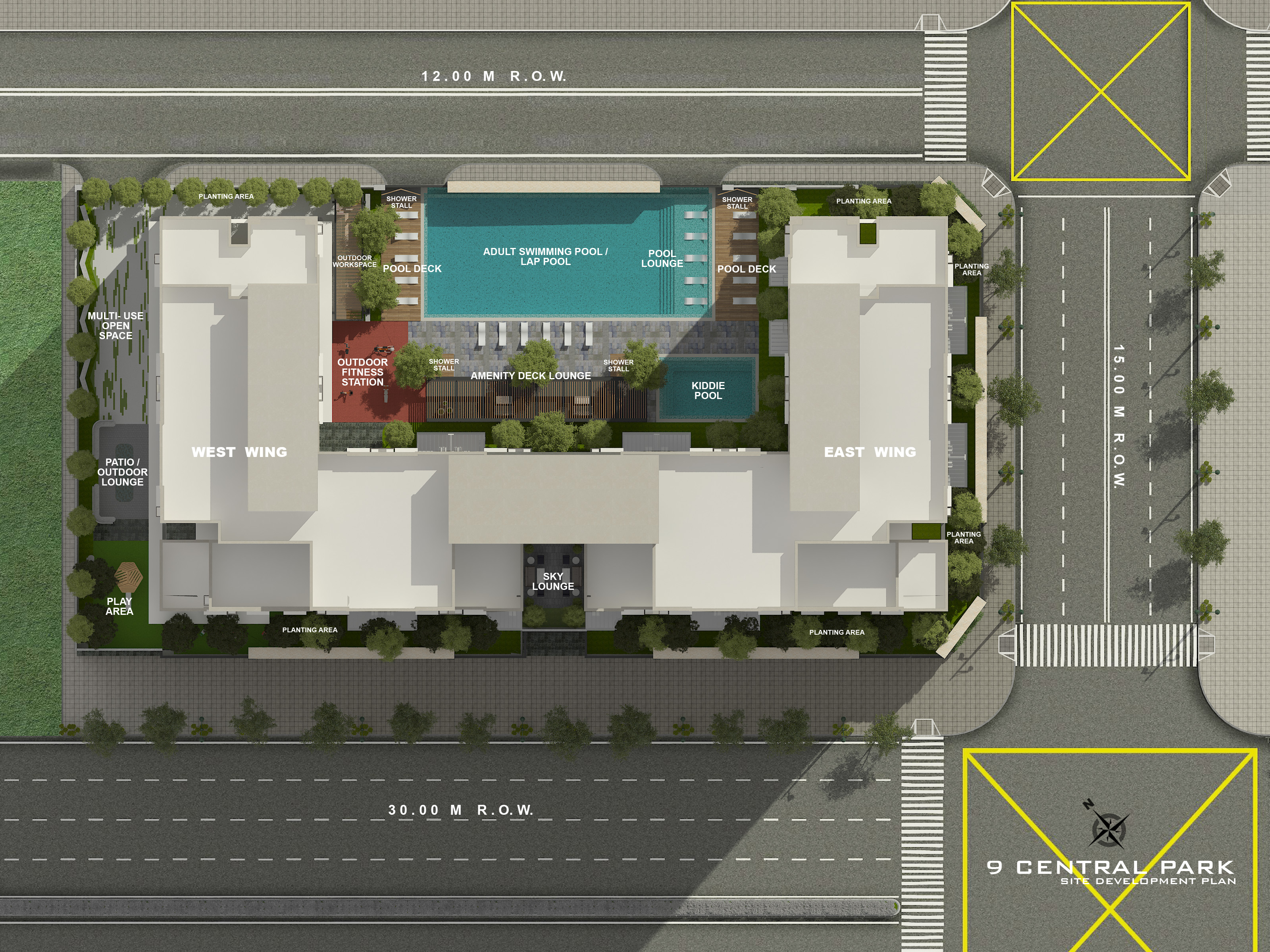
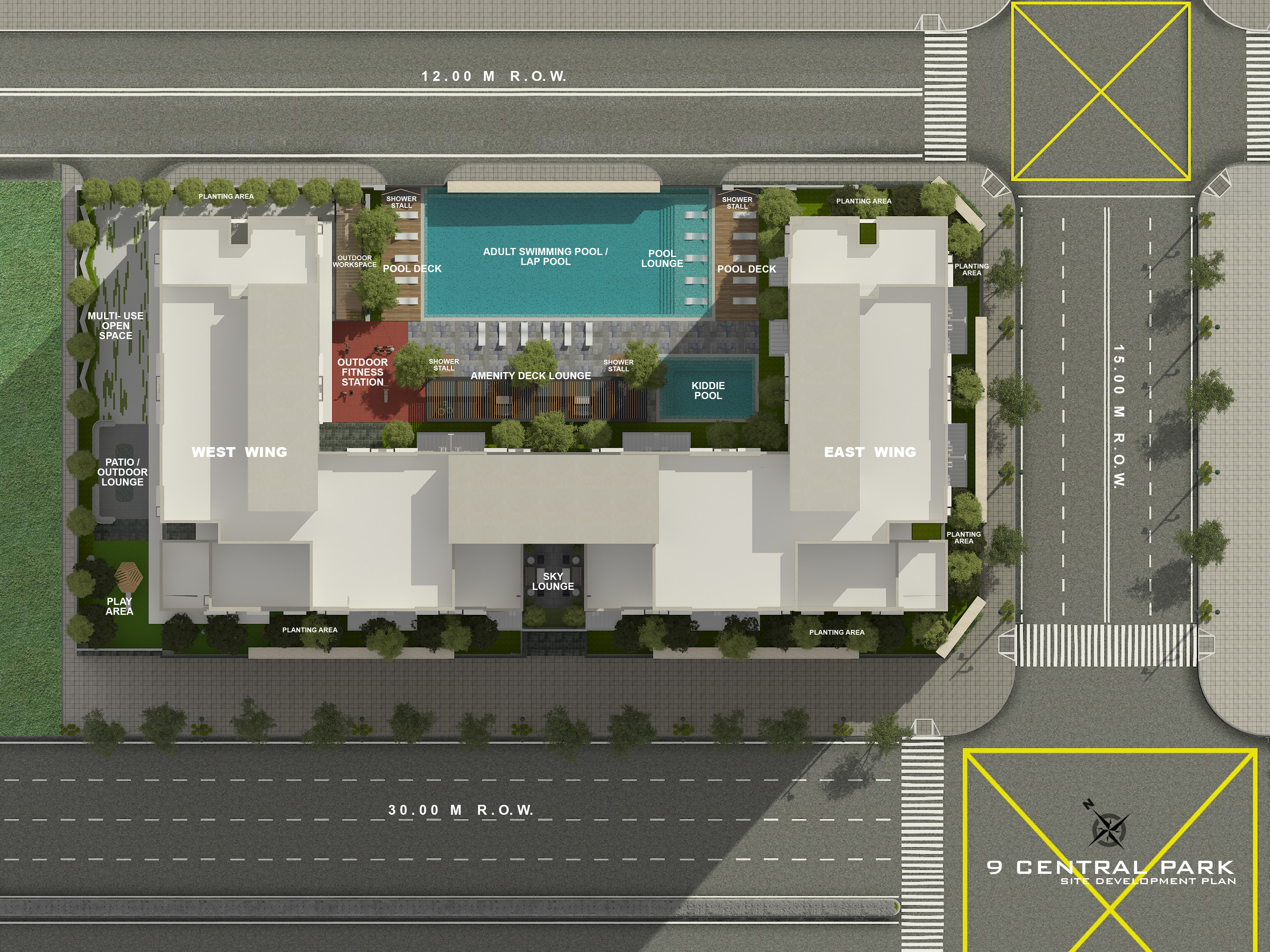
9 Central Park, Megaworld's residential tower inside the Northwin Global City township in Bulacan, is currently pre-selling with a published zero-down entry point starting near ₱10,000 per month on its smallest unit configuration — a different, smaller figure from the pillar's rounder ₱14,000 illustration used elsewhere in this cluster.
We're picking 9 Central Park for this example for a simple reason: it is the one project in this cluster with a specific, currently published entry-point figure rather than a generic illustration, which means the arithmetic below can be tied to a real, named tower instead of a hypothetical "a studio somewhere in Metro Manila." That doesn't make the arithmetic a quote — promo terms, unit availability, and the exact monthly figure all shift as the project moves through its pre-selling phase — but it does make the math concrete instead of abstract.
That gap matters, and it's the whole point of running the math honestly rather than quoting one number and hoping it applies everywhere: ₱14,000 is a rounded illustrative figure for a generic entry-level pre-selling unit across Metro Manila developments; 9 Central Park's own published starting rate is close to but not identical to that figure, and it applies specifically to that tower's smallest configuration under its current promo terms.
Here is the actual arithmetic, run on 9 Central Park's own published ~₱10,000/month entry point (illustrative only, not a quote):
- At a 36-month term: ₱10,000 × 36 = ₱360,000 in construction-period equity paid before turnover.
- At a 60-month term: ₱10,000 × 60 = ₱600,000 in construction-period equity paid before turnover.
- At the full 72-month term: ₱10,000 × 72 = ₱720,000 in construction-period equity paid before turnover.
Add the commonly-cited ~₱60,000 reservation fee on top of whichever total applies, and that is the full amount a buyer would have paid in principal before turnover financing takes over the remaining balance. What this arithmetic deliberately does not do is invent 9 Central Park's total contract price for a specific unit — that figure is not published online, changes with the unit and current promo, and estimating it here would produce a number this article cannot verify. The equity-accumulation math above is exact; the remaining-balance figure at turnover is not knowable without the unit's actual contract price, which is why every version of this math in this guide routes to a specialist for the final number rather than guessing at it. That distinction — exact arithmetic on a known figure versus an honest refusal to invent an unknown one — is the whole difference between this guide and a listing that simply prints "as low as ₱10,000/month" with nothing underneath it.
Neither the ₱14,000 nor the ₱10,000 figure is a fixed price for every unit in the building — larger configurations and different terms produce different monthly figures. Request the current 9 Central Park price list and payment ladder to see the exact number, and the exact remaining balance at turnover, for the unit size you're actually considering.
What Income Do You Realistically Need to Qualify for a Payment Like This?
Qualifying for a pre-selling reservation is generally lighter than qualifying for a bank or Pag-IBIG loan, because the developer is financing the construction-period equity itself rather than underwriting a full mortgage. Even so, two numbers are worth running before reserving:
This is a different qualification bar than most buyers expect walking in. There is typically no payslip review, no credit check, and no debt-to-income calculation at the reservation stage — the developer's underwriting risk during pre-selling is limited, because if a buyer stops paying equity, the developer keeps the unit and (depending on the Contract to Sell) some or all of the equity already collected. That lighter bar is precisely why this structure is accessible to OFWs and first-time buyers who would struggle to clear a bank's standard mortgage screen today. It is also why the two numbers below matter more than the reservation process itself — the developer isn't checking whether you can actually carry this to the end, so you have to.
- Can the monthly equity installment fit your budget without strain — treating it as a fixed obligation for the full 36–72 month term, not a promotional rate that might lapse.
- Can you plausibly qualify for turnover financing later — a Pag-IBIG housing loan caps monthly amortization at roughly 35% of gross monthly income, and a bank loan runs a similar affordability check. If the projected post-turnover payment would exceed what your income supports under that rule, the pre-selling phase is affordable but the exit financing may not be — worth solving before, not after, reservation.
If the projected post-turnover payment would exceed what your income supports under the 35% rule, the pre-selling phase is affordable but the exit financing may not be — worth solving before, not after, reservation.
A rough sanity check worth running before you reserve: take your gross monthly income, multiply by 0.35, and compare that ceiling against the kind of monthly amortization a bank or Pag-IBIG loan would generate on the remaining balance at turnover — not the pre-selling equity figure, which is a different and usually smaller number. If the ceiling comfortably covers a realistic turnover payment, the structure works end to end. If it doesn't, the pre-selling phase alone is not proof the purchase is affordable — it only proves the entry point is.
An OFW earning a stable overseas income with several years of remaining contract work is typically the buyer this structure suits best, since the construction period doubles as a savings-and-qualification runway for the loan that follows.
How Fast Do Zero-Down Promo Terms Change?
Zero-down, extended-term promo structures are developer marketing decisions, not permanent pricing policy. Megaworld and other developers adjust reservation fees, the length of the interest-free equity window, and available unit inventory as a project moves through its pre-selling phase.
Terms available at groundbreaking are not guaranteed to still be available near topping-off or turnover, and inventory of the smallest, lowest-priced units is typically the first to sell out.
Why this happens is straightforward developer economics: the longest interest-free terms and the smallest reservation fees are the most aggressive incentives a developer offers, used to drive early sales velocity when a project has the least proof of progress to sell. As construction advances, unit scarcity increases, buyer confidence in the project rises independent of pricing incentives, and the developer typically tightens terms — shorter equity windows, higher reservation fees, or fewer zero-down configurations. Treat any specific monthly figure, including the ones in this article, as accurate only as of the date it was published, and confirm the live price list and current promo terms before treating a number as locked.
Know Both Numbers Before You Reserve
The number is real. It just isn't the whole story on its own — it describes one phase, one unit type, and one interest-free window, not a permanent monthly cost. Read it that way and the ₱14,000 (or ₱10,000, or any other advertised figure) becomes a useful entry point instead of a suspicious headline: a real, achievable starting payment for a construction-period equity plan, followed by a different, larger payment once turnover financing takes over. Know both numbers before you reserve, not after.
We built this guide because the ₱14,000 headline, taken alone, tells you almost nothing about whether a specific unit fits your specific situation. The illustrative math above is useful for understanding how pre-selling payment plans work — but the number that matters is the one for the exact unit and building you're considering. Talk to a specialist at Manila Skyline Condos and we'll pull the current price list and payment ladder for 9 Central Park or any other building you're eyeing, run the equity-to-turnover math against your actual income, and tell you exactly where the real numbers land — no obligation, no paperwork yet.
About the Author
MSC Editorial is the house editorial brand of Manila Skyline Condos. The team tracks Philippine condo buying, financing, and neighborhood conditions using primary government and developer sources — including official Pag-IBIG Fund publications, DHSUD records, and developer-published reservation terms — so buyers get current, source-checked information rather than forum recaps.
Frequently Asked Questions
Is the ₱14,000/month condo price a bait price?
No — it's a real construction-period figure for a specific entry-level unit stretched over the maximum interest-free term, typically 60–72 months. It isn't the payment for every unit in a building, and it isn't the payment after turnover. It's accurate for what it describes; the issue is that ads rarely explain what it describes.
Does the monthly payment change after I reserve a unit?
The equity installment itself is generally fixed for the pre-selling term once you sign the reservation and payment schedule. What changes is what comes after that term ends: at turnover, the remaining balance converts to bank, Pag-IBIG, or in-house financing at a real interest rate, producing a new and usually higher monthly payment.
What happens if I miss a monthly equity payment during pre-selling?
Developer contracts differ, but missed payments during the equity period typically trigger penalty interest or, after repeated defaults, contract cancellation under terms disclosed in the Contract to Sell — protections and notice periods here are governed in part by the Maceda Law (RA 6552). Review your specific contract's default clause before signing, and raise any concern with your sales specialist immediately if a payment will be late.
Is 9 Central Park's ₱10,000/month figure the same as the ₱14,000/month figure used elsewhere?
No. They describe different things: ₱14,000 is a rounded illustrative figure for a generic entry-level pre-selling unit; ₱10,000 is 9 Central Park's own currently published starting rate for its smallest configuration. Both are indicative and subject to the specific unit and current promo terms — request the current price list for the exact figure on the unit you want.
What is the reservation fee, and is it part of the ₱14,000/month figure?
No — the reservation fee, commonly cited around ₱60,000, is a separate, one-time payment made before the monthly equity schedule even starts. It's deductible from the unit's total price, but it is never folded into the advertised monthly number.
Do association dues start during pre-selling, or only after turnover?
Only after turnover. Association dues begin once the unit is turned over and occupancy starts — they are never charged, and never included in the advertised construction-period figure, during pre-selling.
How long does the interest-free equity period typically last?
Commonly 36 to 72 months, depending on the developer, the project, and the unit. The longer the term, the smaller the monthly figure — which is exactly why entry-level ads tend to advertise the maximum term a project offers.
What income profile does this payment structure suit best?
An OFW or overseas-based buyer with stable income and several years of remaining contract work tends to suit it best, since the construction period functions as a savings-and-qualification runway for the turnover financing that follows.
Can zero-down promo terms disappear before I reserve?
Yes. Reservation fees, the equity-window length, and available inventory are developer decisions that typically tighten as a project moves from groundbreaking toward turnover, and the smallest, lowest-priced units are usually the first to sell out.
Where can I get the exact price and payment ladder for a specific unit?
Directly from a specialist — advertised figures like ₱14,000 or ₱10,000 are illustrative or entry-point numbers, not unit-specific quotes. Request the current price list for the building and unit size you're actually considering.
Sources
All factual claims in this article were verified against official and primary sources:
- Developer pre-selling reservation mechanics (reservation fee, 0% interest equity over 36–72 months) — Megaworld Living reservation guide: https://www.megaworldliving.com/how-to-reserve-a-unit-in-megaworld (verified live, HTTP 200)
- Pre-selling condo payment structure, BGC/Metro Manila developer norms — Megaworld BGC pre-selling guide: https://www.megaworld-bgc.com/blog/pre-selling-condo-bgc/ (verified live, HTTP 200)
- 9 Central Park — Northwin Global City, Bulacan, pre-selling, from ~₱10,000/month, 478 units — VERIFIED-BUILDING-SPECS.md (internal verified building registry)
- Pag-IBIG housing loan 35% income-to-amortization rule, current rates and eligibility — Pag-IBIG Fund official: https://www.pagibigfund.gov.ph/availmentofnewloan.html (verified live, HTTP 200)
- Maceda Law (Republic Act 6552) — buyer protections on installment real estate contracts — cited by reference; see payment terms guide for the full statutory citation and analysis.
Verification note: The ₱14,000/month figure originates in this cluster's pillar post (How OFWs Buy a Manila Condo from Abroad — https://manilaskylinecondos.com/post/ofw-buy-manila-condo-from-abroad-2026) as an illustrative, rounded entry-level figure — it is not a fixed price and is not attributed to any single named building in this article. The ₱10,000/month figure for 9 Central Park is drawn from VERIFIED-BUILDING-SPECS.md, the internal verified-facts registry for this content project. Both figures are presented as indicative and subject to developer terms, unit selection, and current promo availability — readers are directed to request the live price list before treating either number as final. No disputed unit-size or price data was used; where a specific number could not be sourced to a primary reference, this article gates the reader to /contact rather than estimating.
