
How Condo Payment Terms Work in the Philippines (2026)
How Condo Payment Terms Work in the Philippines: Reservation Fee, Down Payment, and Turnover Balance Explained
By MSC Editorial — the in-house editorial team of Manila Skyline Condos, tracking developer pre-selling terms, buyer protections, and Metro Manila condo inventory across the Philippines.
Most first-time buyers hear "20% down payment" and picture a single check. In Philippine pre-selling, that almost never happens. The 20% is not one payment — it's a name for a pool of money collected in three separate stages, over years, from three different sources. Confusing the stages is how buyers misjudge their own budget, and it's the single most common reason a first-time buyer walks away from a solid unit thinking they can't afford it when they actually can.
This guide breaks the payment structure into its three real parts — reservation, down payment, and turnover balance — and shows exactly where each peso goes, who collects it, and what protects you if something goes wrong along the way.
Key Takeaways
- A condo payment schedule has three distinct stages, not one: a reservation fee, a staggered down payment across the construction period, and a balance settled at turnover through a bank, Pag-IBIG, or in-house loan.
- The reservation fee locks the unit and the price — it is credited toward the contract price, not an extra cost on top of it.
- The down payment is spread interest-free over the pre-selling period, which is why monthly entry terms can look this low on smaller units. (Figures throughout are market estimates; confirm exact terms per project.)
- Pre-selling and RFO (ready-for-occupancy) structure this timeline differently — RFO compresses the down payment into 30–60 days with no construction-period runway.
- Maceda Law (RA 6552) protects installment buyers on either route — a legitimate schedule always discloses grace-period and refund terms, and any developer who won't put that in writing is a red flag.
Quick orientation: This guide is part of the P3 Pre-Selling, Payments & ROI cluster. For the full pre-selling picture — the payment ladder, ROI expectations, and Maceda Law protections — start with the P3 pillar: Pre-Selling Condos in Manila 2026. Deciding between the two buying modes first? See pre-selling vs RFO, which should you buy. Choosing a neighborhood? Read what living in BGC actually looks like in 2026.
What Are the Three Parts of a Philippine Condo Payment Schedule?
Every Philippine pre-selling condo purchase — regardless of developer or tower — is collected in three stages, not one lump sum. The stages differ in size, timing, and legal protection, which is exactly why lumping them into a single "20% down payment" number causes so much confusion.
Definition — pre-selling payment structure: A reservation fee that locks the unit, followed by a down payment (or "equity") portion paid in installments across the construction period, followed by a balance settled at turnover through formal financing. Each stage has a different purpose, a different payer relationship, and a different level of legal protection.
- Reservation fee. A relatively small upfront amount, commonly in the ₱25,000–₱60,000 range at major developers, paid to hold a specific unit and freeze today's price while paperwork is completed. It is typically credited toward the contract price — your first payment, not a separate fee. The exact amount varies by developer, project tier, and sometimes by unit size, so treat any number quoted online as a starting point rather than the figure for a specific tower.
- Down payment / equity, staggered. Instead of one lump 20% deposit, developers commonly split 10–35% of the contract price into monthly installments across the 2–4 year build, usually at zero interest. This is the stage that produces headline "low monthly, zero down" entry terms on smaller units. Some developers additionally structure a short step-up in the final months before turnover, so a monthly figure that looked flat for two years can shift slightly as turnover approaches — another reason to request the full computation sheet rather than rely on a single monthly number.
- Balance at turnover. When the building is completed, the remaining 65–90% is settled through a bank mortgage, a Pag-IBIG housing loan, or the developer's in-house financing. Which route is available, and at what rate, depends on income documentation, credit history, and Pag-IBIG contribution record — so qualification should start well before the tower is finished.
Treating these as one number is the mistake. A buyer who only budgets the monthly construction-period figure and forgets the turnover balance is the buyer who gets caught short when the building is finally handed over.
How Does the Reservation Fee Lock In Your Unit and Price?
The reservation fee does two jobs at once: it removes the specific unit from inventory so it can't be sold to someone else, and it freezes the price on the day you pay it — before any list-price increase the developer may apply to remaining inventory as the tower sells out.
The fee is paid directly to the developer (or its accredited broker) and is almost always non-refundable once the reservation period lapses, though it is credited against the total contract price rather than lost. This is also the point where a buyer should request — and read — the Contract to Sell, the project's DHSUD License to Sell, and the computation sheet showing exactly how the reservation fee, down payment schedule, and turnover balance add up to the full price.
A legitimate developer produces this documentation without resistance. Reluctance to show the Contract to Sell, the DHSUD License to Sell, or the computation sheet before accepting your money is itself a warning sign — not a formality you can skip.
In practice, the reservation period is short — commonly 15 to 30 days at major developers — during which the buyer submits the Contract to Sell and initial documentation to keep the unit locked. Some developers offer a brief cooling-off allowance where the fee can still be refunded before signing; others do not. That detail isn't standardized by law the way Maceda Law protections are, so it's worth asking about — in writing — before paying anything.
How Do Staggered Down Payment Schedules Typically Work?
Once the reservation fee is paid, the down payment portion begins — and this is where pre-selling earns its reputation for accessibility.
Rather than requiring the buyer to produce 20% in cash before signing, developers commonly spread the down payment across the entire pre-selling construction window, often 2 to 4 years, in equal monthly installments at zero interest. On a smaller unit, this is what produces the low-monthly, sometimes-zero-down entry terms marketed by pre-selling developers — you are effectively financing your own equity build-up in small pieces while the tower rises, instead of borrowing it from a bank at the outset.
The mechanism, in one line: a staggered down payment lets a buyer finance their own equity build-up in small monthly pieces while the tower rises, instead of borrowing that same amount from a bank at the outset.
The exact percentage allocated to this stage, and whether a "zero-down" promotion removes it entirely, varies by project and developer strategy — not a fixed industry number. Any monthly figure quoted for a specific tower should be confirmed directly with that project's accredited sales team.
To make the mechanics concrete: on a smaller unit with roughly 20% total equity split evenly across a 4-year build, the resulting figure lands in the low five figures per month — the arithmetic behind the "~₱14,000/month" entry terms common in pre-selling marketing. We test whether that kind of number holds up as an honest monthly commitment once other costs are added in the honest math behind a ₱14,000-a-month condo. The specific figure for any tower is still a request-the-price-list question, not a rule of thumb.
What Happens to the Balance at Turnover? The Three Financing Routes
The balance — typically 65–90% of the contract price — comes due when the building is completed and ready for turnover. This is the stage buyers most often underestimate, because it requires arranging formal financing rather than simply continuing a small monthly installment.
There are three routes:
- Bank mortgage. Typically the lowest interest rate of the three, but requires full income documentation and credit approval, with amortization terms commonly running 10–25 years. Bank approval takes time, so start the application well before turnover, ideally as soon as the building nears topping-off.
- Pag-IBIG housing loan. Available to members with at least 24 monthly fund contributions, with competitive rates for principal residences and qualifying investment units. Terms and loan ceilings are set by the Home Development Mutual Fund (HDMF) and can change — current program details at the official Pag-IBIG Fund site are the source to check, listed in the Sources section below.
- Developer in-house financing. The path of least documentation, since the developer finances the balance itself rather than requiring bank-grade credit underwriting — but it carries the highest interest rate of the three. Treat it as a fallback to budget against, not the route to plan around from the start.
The buyers who avoid trouble at turnover are the ones who begin the bank or Pag-IBIG qualification process during the construction period, so they are not forced into the costlier in-house rate simply because they ran out of time.
How Does the Payment Structure Differ Between Pre-Selling and RFO?
The three-stage structure above describes pre-selling. Ready-for-occupancy (RFO) compresses the same idea into a much shorter runway.
On an RFO unit, there is no multi-year construction period to spread payments across. The down payment — commonly 10–20% of the price — is typically due within 30 to 60 days of reservation, and the balance financing (bank, Pag-IBIG, or in-house) has to be arranged almost immediately afterward. There is no years-long window to build up bank eligibility gradually; a buyer who has not pre-screened their own financing before reserving an RFO unit can find themselves unable to close in time. The full comparison of who each route suits is covered in pre-selling vs RFO, which should you buy.
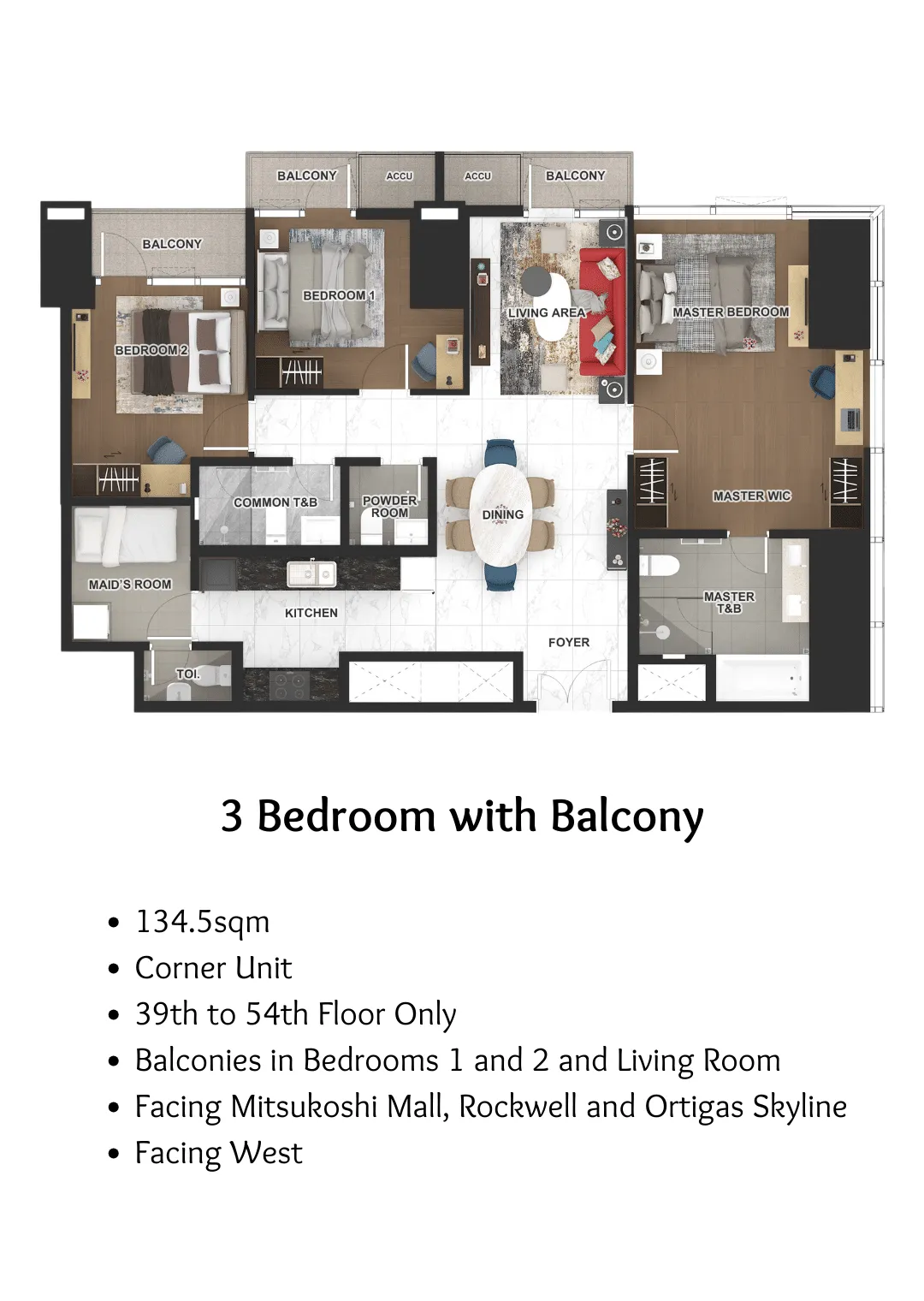
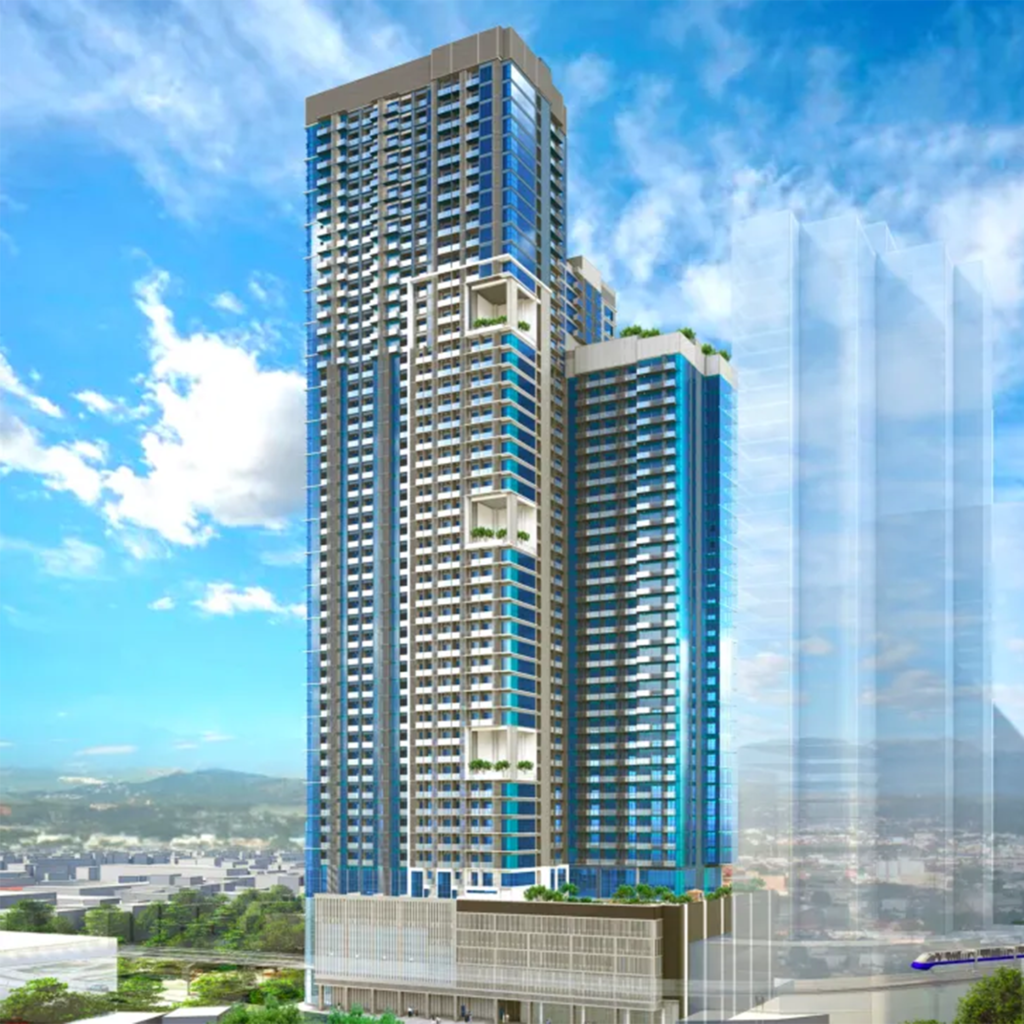
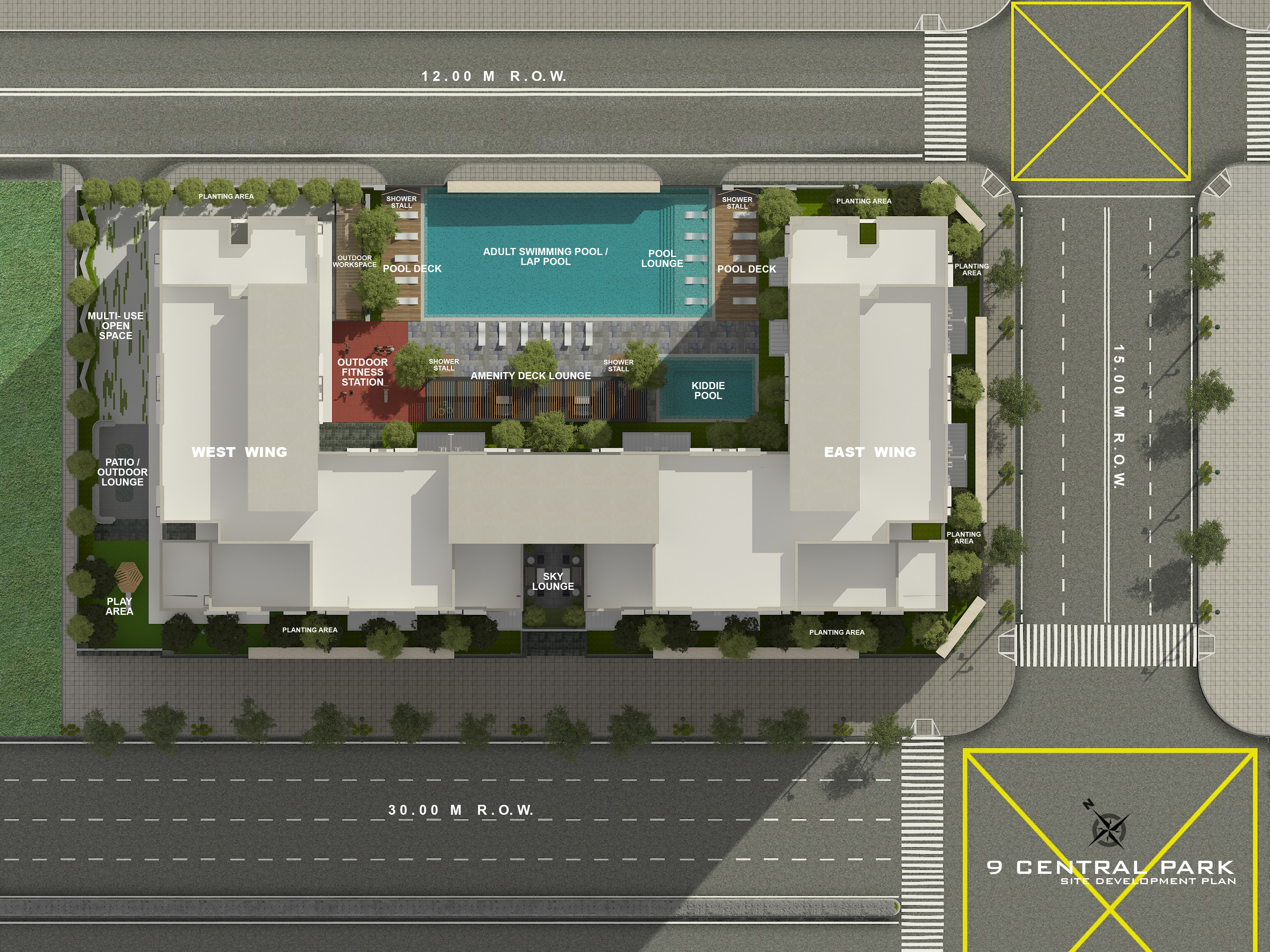
How Do Payment Terms Compare Across Park McKinley West, Uptown Modern, and 9 Central Park?
"Payment terms" means something different depending on a project's construction status, and three verified examples make the contrast concrete.
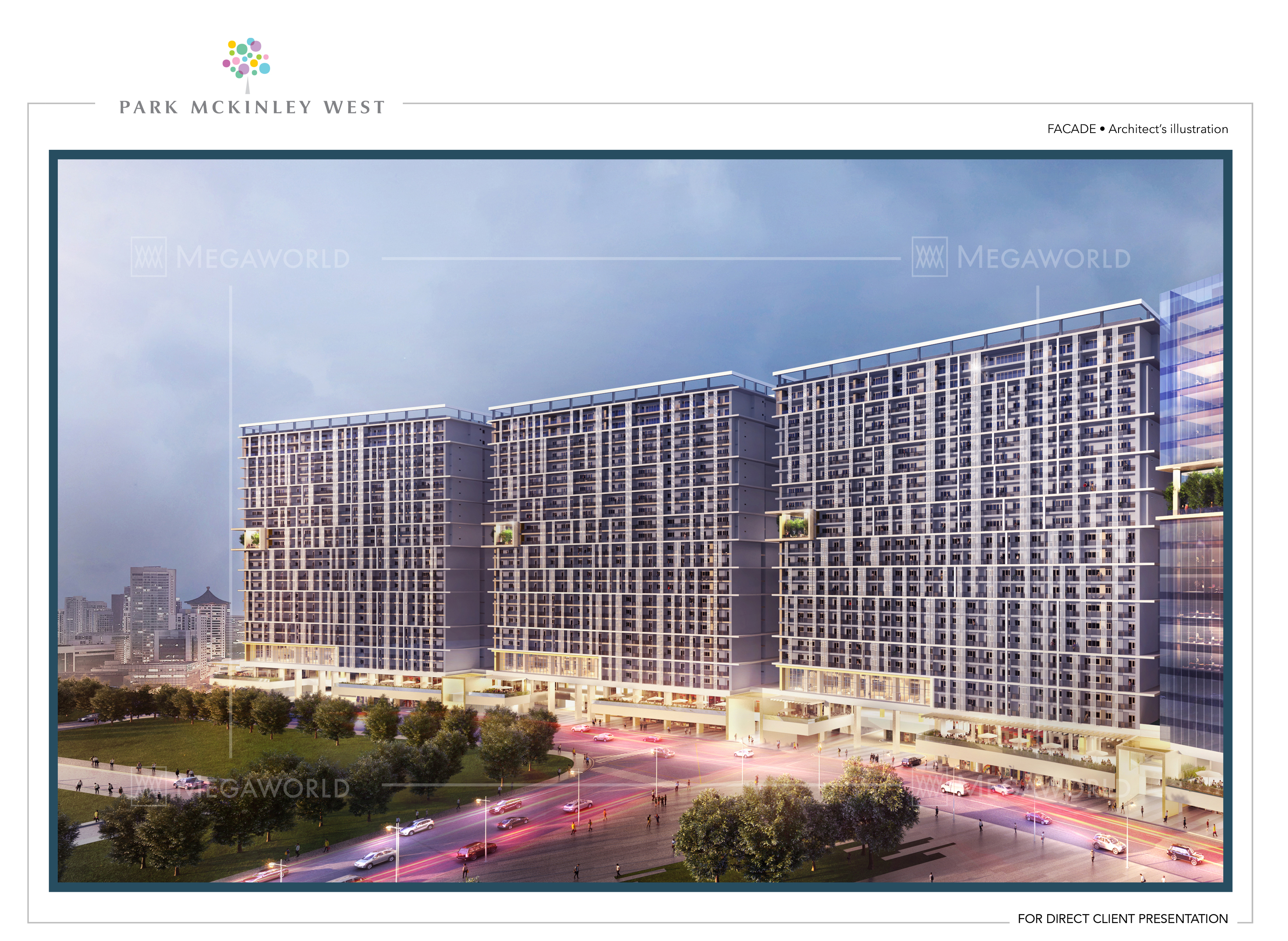
The table below lines up all three side by side — construction status, location, and indicative pricing — because status is what decides which payment ladder actually applies to a given tower.
| Building | Status | Location | Indicative Price* | Which Ladder Applies |
|---|---|---|---|---|
| Park McKinley West | RFO — turnover started, limited inventory | McKinley West, Taguig | ₱10.9M | Compressed RFO timeline: down payment due in 30–60 days, balance financing arranged almost immediately |
| Uptown Modern | Pre-selling | Uptown Bonifacio, BGC, Taguig | ₱14.4M (promo, valid until July 31, 2026) | Full three-stage ladder: reservation, staggered down payment across the build, turnover balance still years out |
| 9 Central Park | Pre-selling | Northwin Global City, Bulacan | ₱8.3M (promo) | Full three-stage ladder, with a published entry point starting from roughly ₱10,000/month |
*Current promo pricing as of this writing; confirm exact figures with the accredited sales team before reserving, since prices and promotions change as units sell.
Park McKinley West, in McKinley West, Taguig, is RFO — turnover has started, with limited remaining inventory. For a buyer looking at Park McKinley West today, the three-stage pre-selling ladder described above is largely academic on remaining units: the compressed RFO timeline applies instead, with a nearer-term down payment and an immediate move to bank, Pag-IBIG, or in-house financing rather than a multi-year construction-period schedule.
Uptown Modern, also in Uptown Bonifacio, BGC, remains in pre-selling. Here, the full three-stage structure applies: reservation fee, a staggered down payment across the build period, and a turnover balance still years out. 9 Central Park, in Northwin Global City, Bulacan, is likewise pre-selling, with a published entry point starting from roughly ₱10,000 per month — a concrete illustration of how low a pre-selling monthly commitment can be structured on the right unit type, though the exact figure is project-specific and subject to change.
The takeaway: before asking "what are the payment terms," a buyer first needs to know a project's construction status, because that status decides which of the two timelines — the multi-year pre-selling ladder or the compressed RFO schedule — actually applies. The table above is a snapshot, not a live price list — get a full breakdown for a specific unit through our contact page before treating any figure as final.
What Hidden Costs Come on Top of the Listed Payment Terms?
The reservation fee, down payment, and turnover balance cover the contract price itself — not the full cost of buying a condo. A buyer who budgets only the three payment-schedule stages can still be caught off guard at turnover by a second, smaller list of standard fees.
- Transfer taxes and registration fees. Ownership transfer typically involves documentary stamp tax, transfer tax, and registration fees with the Registry of Deeds, commonly totaling a low single-digit percentage of the contract price. Who pays which portion (buyer or developer) is set in the Contract to Sell, so it should be confirmed line by line rather than assumed.
- Move-in and utility connection fees. Most developments charge a one-time move-in fee, plus separate connection fees for electricity and water meters, due at or shortly after turnover.
- Association dues. Monthly dues for building upkeep, security, and amenities begin at turnover — not during construction — and are billed per square meter, so a larger unit carries a proportionally larger monthly due.
- Real property tax. Once the unit is titled in the buyer's name, an annual real property tax applies, assessed by the local government unit where the building sits.
- Loan-related fees, if financing the balance. Bank and Pag-IBIG loans typically carry appraisal fees, mortgage registration fees, and fire or mortgage-redemption insurance premiums bundled into the loan process.
None of these figures are fixed nationally — they vary by developer, project, and local government unit, which is why the computation sheet should itemize them rather than leave them as a footnote. A schedule that only shows the reservation fee, down payment, and balance, with no mention of these secondary costs, is incomplete — and the buyer who plans only around the headline three stages is the buyer most likely to be short at turnover. Ask for a full cost breakdown, not just the price list, through our contact page before signing anything.
What Should a Legitimate Payment Schedule Always Disclose — and What Happens If You Miss a Payment?
A payment schedule that is actually compliant with Philippine law will always disclose certain things in writing. Their absence is the red flag worth acting on.
- A written computation sheet breaking down the reservation fee, the down payment schedule (amount and number of months), and the turnover balance — not a verbal promise.
- The DHSUD License to Sell for that specific project, since PD 957 prohibits pre-selling without one.
- Maceda Law (RA 6552) terms, in writing, on grace periods and refund rights if a payment is missed: if at least two years of installments have been paid, the buyer is entitled to a grace period of one month for every year paid, and — if the contract is cancelled — a cash surrender value refund starting at 50% of total payments made, rising 5% per year after five years, capped at 90%. If less than two years have been paid, the buyer is entitled to a minimum 60-day grace period, though no cash refund is mandated at that stage. Cancellation itself is never instant: it requires a notarial notice, and only takes effect 30 days after the buyer receives it.
- No pressure to pay before documentation is issued. A developer asking for money before providing the Contract to Sell, the computation sheet, or proof of the License to Sell is not following the standard the law requires.
To make the mechanics concrete: consider a buyer two and a half years into a staggered down payment who misses an installment after a job change. Because more than two years of payments have been made, that buyer is entitled to a grace period of one month per year paid — at least two months — before the developer can begin cancellation. If the contract is eventually cancelled, they're entitled to a cash surrender value refund starting at 50% of total payments made, not a forfeiture of everything paid. A buyer only eight months into the same schedule has thinner protection: a minimum 60-day grace period, no mandated refund. The two-year mark is the single most consequential date in the schedule — worth marking the day a Contract to Sell is signed.
The two-year mark changes everything. Past two years of payments, a cancelled contract still returns a cash surrender value starting at 50% of what was paid. Under two years, the buyer's protection is a grace period only — no mandated refund. Knowing which side of that line a payment schedule sits on is worth confirming the day a contract is signed, not the day a payment is missed.
Any payment schedule missing these disclosures should be treated as unverified, not assumed to be standard practice.
The Answer for Your Own Situation
The reservation fee locks your unit and price. The staggered down payment is where your monthly budget lives during construction. The turnover balance is where your bank or Pag-IBIG relationship needs to already be in place. Three stages, three different jobs — and knowing which one you're looking at is what turns a payment schedule from a confusing wall of numbers into a plan you can actually follow.
For the exact reservation amount, the monthly down-payment figure, and the turnover balance on a specific tower, request the official price list and payment computation via our contact page, or browse current pre-selling and RFO listings — these numbers are project-specific and change as units sell, so the current figures come directly from the developer's accredited team. If you'd rather talk it through than read a price sheet, request a call through our contact page and a specialist can walk you through the exact math for the unit you have in mind.
About the Author
MSC Editorial is the in-house editorial team behind this guide — the house editorial brand for Manila Skyline Condos. The team researches Philippine condo buying, financing, and neighborhoods using primary legal and developer sources, tracking developer pre-selling structures (reservation, down-payment, and turnover mechanics), Philippine buyer-protection law (PD 957, RA 6552), and live Metro Manila condo inventory. Every legal and financial claim in this guide is sourced to primary statute text, a government body, or a named market report, listed under Sources below.
A Quick, Honest Disclaimer
This guide is general information, not legal, tax, or financial advice, and nothing here is a guarantee of investment returns or financing approval. Payment terms, promotions, and financing eligibility vary by project, developer, and buyer profile, and can change without notice. Before signing or paying anything, confirm the specifics with a licensed Philippine real estate broker, lawyer, and/or financial professional.
Frequently Asked Questions
What are the three parts of a typical condo payment schedule in the Philippines?
A reservation fee that locks the unit and price (commonly ₱25,000–₱60,000, credited toward the price), a down payment or equity portion spread in installments across the construction period (commonly 10–35% of the contract price, often at zero interest), and a balance — usually 65–90% of the price — settled at turnover through a bank loan, a Pag-IBIG loan, or the developer's in-house financing.
Is the reservation fee refundable?
Typically no once the reservation period lapses, but it is credited toward the total contract price rather than lost outright — it functions as your first payment, not a separate charge. Confirm the specific reservation terms and any cooling-off period in the project's Contract to Sell before paying.
Why is the monthly payment lowest during pre-selling and higher after turnover?
During pre-selling, the down payment/equity portion is spread interest-free across the 2–4 year construction period, which keeps the monthly figure low. After turnover, the much larger remaining balance (usually 65–90% of the price) is due, converted into a formal bank, Pag-IBIG, or in-house loan with its own amortization schedule — which is a materially different, larger monthly obligation than the construction-period figure.
Does the payment structure differ between pre-selling and RFO units?
Yes. Pre-selling spreads the down payment over years; RFO compresses it into 30–60 days from reservation, with financing for the balance arranged almost immediately after, since there's no multi-year construction runway to build up bank eligibility gradually.
What legal protections apply if I miss a payment?
The Maceda Law (RA 6552) applies to installment buyers. With at least two years of payments made, you get a grace period of one month per year paid and, if the contract is cancelled, a cash surrender value refund starting at 50% of total payments (rising 5% per year after five years, capped at 90%). With less than two years paid, you get a minimum 60-day grace period but no mandated refund. Cancellation requires a notarial notice and takes effect 30 days after you receive it.
What should a legitimate payment schedule always include in writing?
A written computation sheet detailing the reservation fee, down payment schedule, and turnover balance; proof of the project's DHSUD License to Sell (required under PD 957 before any pre-selling); and disclosed Maceda Law grace-period and refund terms. A developer requesting payment before providing this documentation is not following standard practice.
Are there hidden costs on top of the reservation fee, down payment, and balance?
Yes. Buyers should also budget for transfer taxes and registration fees, move-in and utility connection fees, association dues starting at turnover, annual real property tax once titled, and — if financing the balance — loan-related fees like appraisal and mortgage registration. These vary by developer and unit size, so ask for an itemized computation sheet.
What happens if I can't pay the turnover balance on time?
The risk is not being approved for financing in time rather than the balance itself changing. Buyers who start the bank or Pag-IBIG qualification process during construction, well before turnover, avoid being forced into the costlier in-house rate simply because they ran out of time.
Does the reservation fee or down payment schedule differ by developer?
Yes. The reservation fee range, the down payment percentage, whether a zero-down promotion applies, and the installment window length are all set by the individual developer and project, not a single industry standard. Confirm the specific numbers with that project's accredited sales team.
How do payment terms compare between Park McKinley West, Uptown Modern, and 9 Central Park?
Park McKinley West is RFO, so its remaining units follow the compressed RFO timeline rather than the multi-year pre-selling ladder. Uptown Modern and 9 Central Park are both still pre-selling, so the full three-stage structure — reservation fee, staggered down payment, and turnover balance — applies to both, though indicative pricing and location differ (Uptown Modern in Uptown Bonifacio, BGC; 9 Central Park in Northwin Global City, Bulacan). Current promo pricing should always be confirmed directly, as it changes as units sell.
Sources
Legal and market facts in this guide were verified against the following authoritative sources:
- Maceda Law (RA 6552) — grace periods (1 month per year paid; 60-day minimum under 2 years), cash surrender value (50% after 2 years, +5%/year after 5 years, cap 90%), notarial cancellation + 30-day effectivity:
- Full statute text (LawPhil): https://lawphil.net/statutes/repacts/ra1972/ra_6552_1972.html — HTTP 200, own-curl verified.
-
DHSUD official FAQs: https://dhsud.gov.ph/maceda-law-ra-6552-legal-faqs/ — returns HTTP 403 to automated curl requests (site-level bot/WAF protection), consistent with the same result on this domain in the P3-01/P3-02 sources; content not independently re-verified in this pass beyond the LawPhil primary text, which corroborates the same grace-period and refund figures.
-
PD 957 (Subdivision and Condominium Buyers' Protective Decree) — License to Sell requirement, performance bond, refund on non-development, buyer's right to examine documents:
- Full text (LawPhil): https://lawphil.net/statutes/presdecs/pd1976/pd_957_1976.html — HTTP 200, own-curl verified.
-
DHSUD official FAQs: https://dhsud.gov.ph/p-d-no-957-legal-faqs/ — returns HTTP 403 to automated curl requests (same WAF behavior as above); not independently re-verified in this pass beyond the LawPhil primary text.
-
Pag-IBIG (HDMF) housing loan program and eligibility requirements:
-
HDMF official housing loan page: https://www.pagibigfund.gov.ph/HousingLoanProgram_RHLP.html — HTTP 200, own-curl verified.
-
Pre-selling payment structure (reservation fee range, staggered down payment, turnover balance percentage), pre-selling vs RFO timeline contrast:
- Eurotowers International: https://eurotowersintl.com/pre-selling-vs-rfo-condos-which-is-the-better-investment-in-the-philippines/
-
These general figures (reservation fee range, down-payment percentage range, turnover balance percentage) are the same market-estimate ranges already cited and flagged as indicative in the P3-01 pillar and P3-02 sibling guide.
-
Building-specific status and pricing facts (Park McKinley West = RFO, turnover started, limited inventory, ₱10.9M; Uptown Modern = pre-selling, ₱14.4M promo valid until 2026-07-31; 9 Central Park = pre-selling, ₱8.3M promo, from ~₱10,000/mo, Northwin Global City, Bulacan):
VERIFIED-BUILDING-SPECS.md(internal verified building registry).
Note on verification: Legal mechanics (Maceda Law grace periods and cash surrender value; PD 957 License to Sell and non-development refund) are confirmed against primary statute text (LawPhil, HTTP 200 own-curl verified). The two DHSUD FAQ pages cited alongside the statutes returned HTTP 403 to automated curl requests during this drafting pass — consistent with known bot/WAF protection on dhsud.gov.ph rather than evidence the pages are down — and are retained as supplementary context, not as the sole verification for any claim. Reservation-fee ranges, down-payment percentage ranges, and turnover-balance percentages are market estimates from property-industry sources, flagged in-text as indicative and not fixed for any specific tower. Building prices (Park McKinley West, Uptown Modern, 9 Central Park) are current promo figures from the internal verified building registry, subject to change without notice. Readers should confirm current terms with a licensed Philippine real estate broker or financial professional before any purchase decision.
